
A patio door does more than connect your home to the outdoors. It can influence how a room feels, how natural light moves through the space, and how seamlessly your interior connects with a deck, patio, garden, or backyard.
Yet patio doors are often treated as a purely functional element: something that opens, closes, and provides access outside.
With the right approach, they can become much more than that.
A thoughtfully selected and styled patio door can act as a visual focal point, make a room feel larger and brighter, frame an outdoor view, and contribute to the overall character of your home. Whether you are updating an existing space or planning a renovation, the goal is to make the patio door feel intentionally integrated into the design rather than like an afterthought.
Here are some ways to turn your patio door into a genuine feature of your home.
1. Start With the View
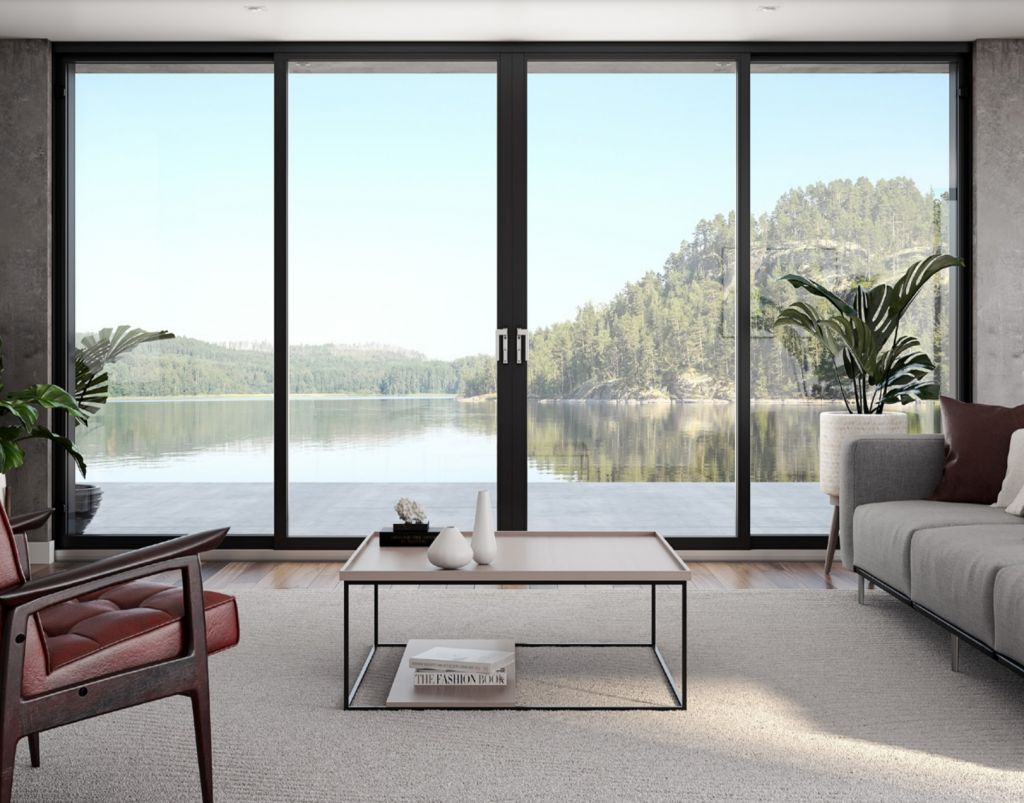
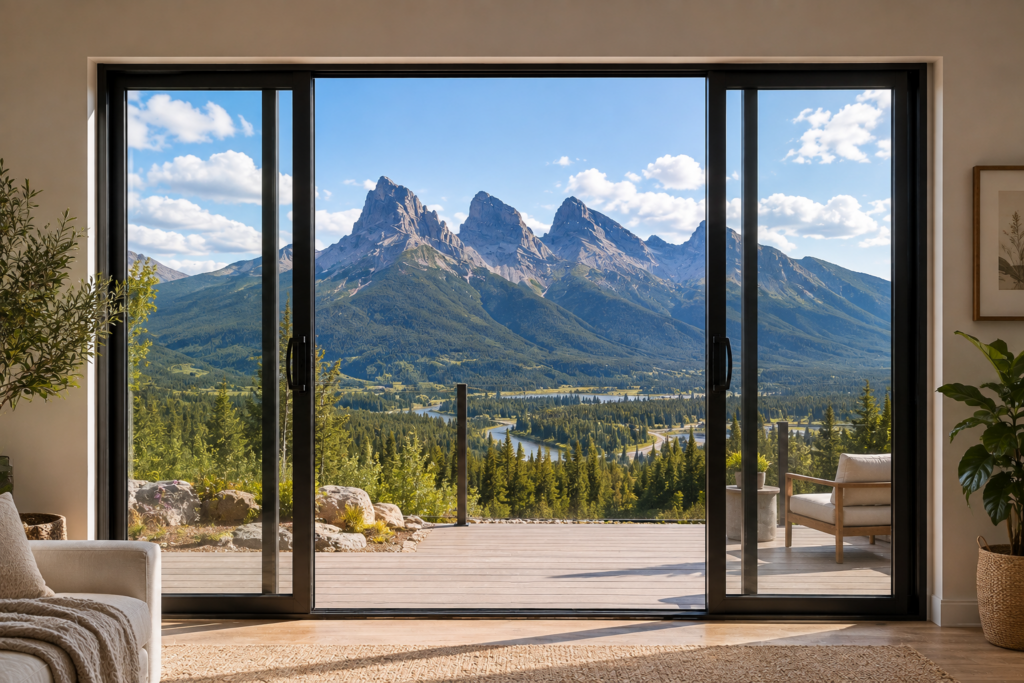
One of the biggest advantages of a patio door is that it can frame the outdoors like a large piece of artwork.
Instead of thinking of the backyard as something beyond the glass, consider it part of the room’s visual composition.
A patio door facing a landscaped garden, mature trees, a deck, or an open backyard can naturally draw the eye outward. When the view is attractive, keeping the surrounding area visually simple can help the door and the scenery work together.
Think about what someone sees when they are sitting on the sofa or walking into the room.
Is the view framed by the door?
Does the glass allow enough of the outdoor space to be visible?
Are there unnecessary objects, heavy curtains, or furniture blocking the sightline?
Sometimes, making the patio door a feature does not require adding anything at all. It can simply mean allowing the door and the view beyond it to take centre stage.
2. Choose a Door Style That Complements the Room
Not every patio door creates the same visual effect.
The style you choose can influence everything from how much glass is visible to how the door operates and how it interacts with the surrounding furniture.
Sliding patio doors are a popular choice because their panels move horizontally rather than swinging into the room or outdoor area. This can make them particularly practical where floor space is limited.
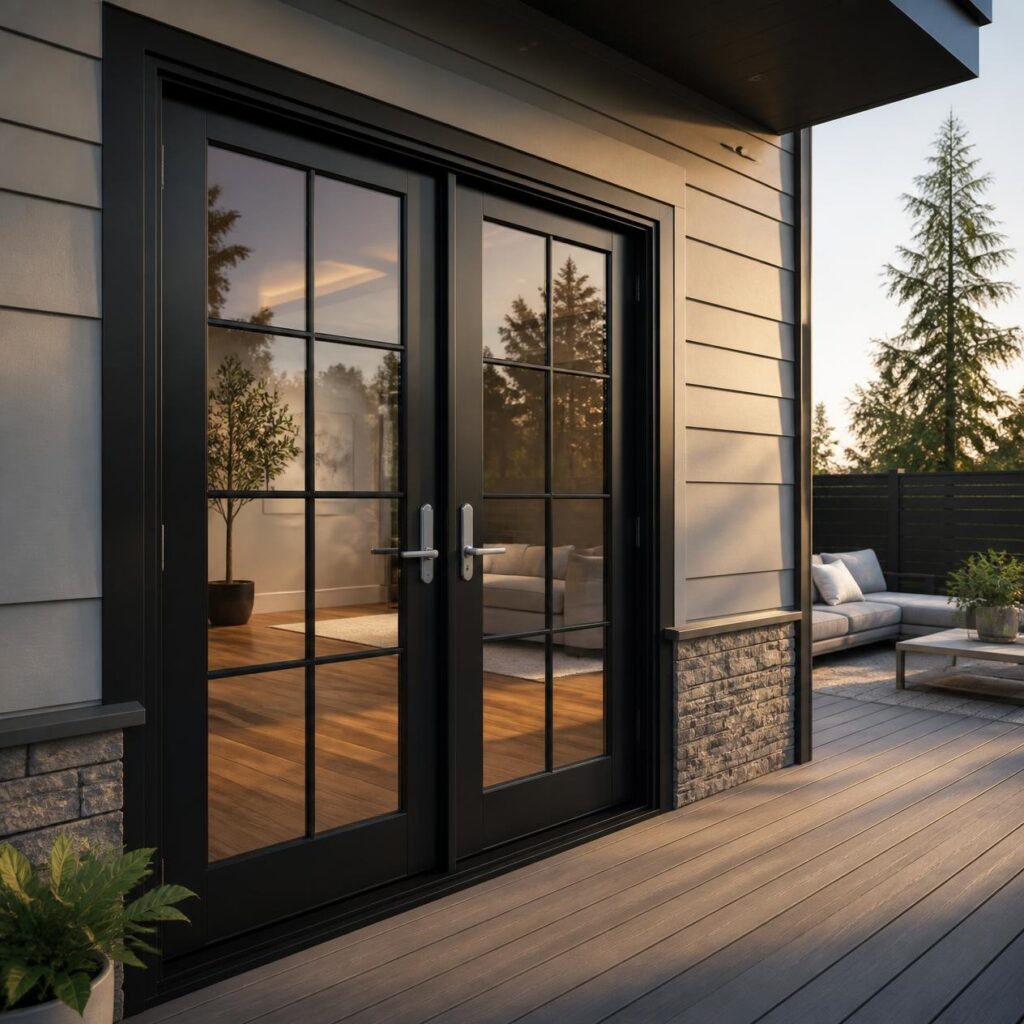
French-style patio doors, on the other hand, can introduce a more traditional architectural character. Their wider opening and more defined framing can give a room a distinctive sense of proportion.
The important thing is not simply choosing the most attractive door on its own. The door should complement the architecture around it.
For a contemporary interior, clean lines and expansive glass can reinforce a minimalist aesthetic. In a more traditional home, defined frames and classic proportions may feel more natural.
The patio door should look like it belongs there.
3. Make Natural Light Part of the Design
One of the simplest ways to elevate a patio door is to take advantage of the natural light it provides.
Large areas of glass can bring significantly more daylight into a room, making the space feel brighter and more open.
This is particularly valuable in rooms where natural light is limited.
Instead of treating daylight as merely a practical benefit, think about how it changes the character of the room throughout the day.
Morning light can create a completely different atmosphere from afternoon or evening light. The position of the patio door, surrounding walls, flooring, furniture, and window treatments can all influence how that light is experienced.
Light-coloured walls and carefully positioned furniture can help reflect and distribute daylight throughout the room.
The result can be a space that feels more open without actually increasing its size.
4. Keep the Area Around the Door Uncluttered
A beautiful patio door can easily lose its impact when it is surrounded by clutter.
Shoes, storage bins, oversized furniture, plants, toys, and other everyday items can quickly turn the area around an exterior door into a busy transition zone.
If you want the patio door to become a design feature, give it some breathing room.
Avoid placing large furniture directly in front of the glass unless the layout requires it. Instead, consider positioning seating slightly to the side so the door remains visually accessible.
A clear sightline can make a surprisingly big difference.
The goal is not necessarily to create a completely empty space. It is to establish enough visual order that the patio door remains one of the room’s defining elements.
5. Use Window Treatment Strategically
Window coverings can either enhance a patio door or hide it.
Heavy curtains that remain closed throughout the day can reduce natural light and conceal one of the most attractive architectural features in the room.
That does not mean window treatments should be avoided. They simply need to be selected with the door’s design and purpose in mind.
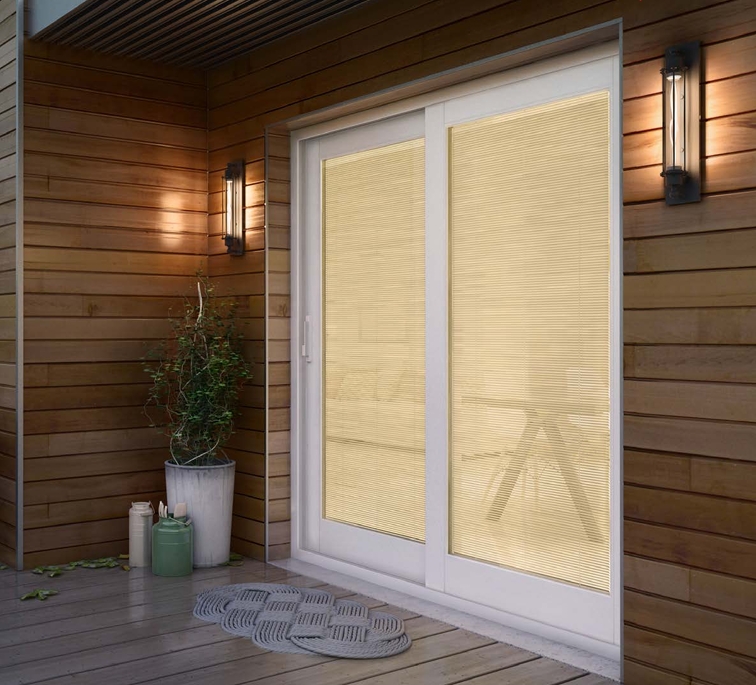
Sheer curtains can soften the appearance of a large glass area while allowing daylight to pass through. Blinds or shades can provide privacy and light control without overwhelming the door.
For some spaces, simple, minimal treatments may be the best option.
Consider the patio door itself when choosing the treatment. You want the covering to provide the privacy, glare control, and light management you need while still allowing the glass and outdoor connection to remain visible when desired.
6. Coordinate the Door With the Interior
A patio door can feel disconnected when its frame, surrounding trim, colours, and materials clash with the rest of the room.
Instead, consider the door as part of the interior’s overall palette.
Frame colour can play an important role. A darker frame can create definition and contrast, while a lighter frame may blend more subtly into the surrounding walls.
Trim, flooring, cabinetry, furniture, and nearby windows can also help establish visual continuity.
You do not necessarily need every element to match exactly.
In fact, too much matching can make a room feel predictable.
Instead, look for relationships between materials and colours. A patio door frame might echo the finish of nearby window frames, hardware, lighting fixtures, or other architectural details.
Small connections like these can make the entire room feel more intentional.
7. Create a Strong Indoor-Outdoor Connection
A patio door becomes especially powerful when the transition between indoors and outdoors feels deliberate.
Consider what lies directly beyond the door.
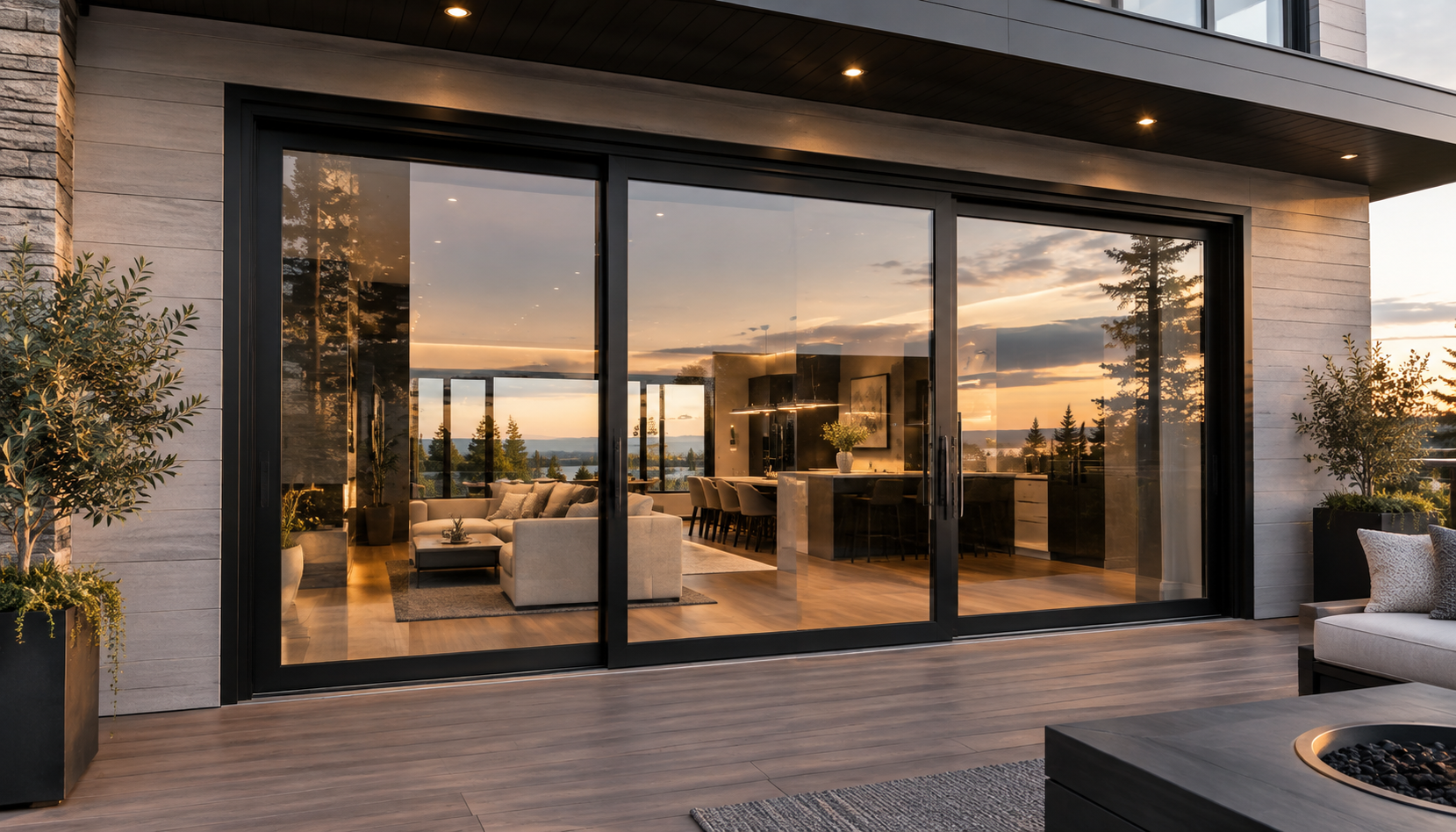
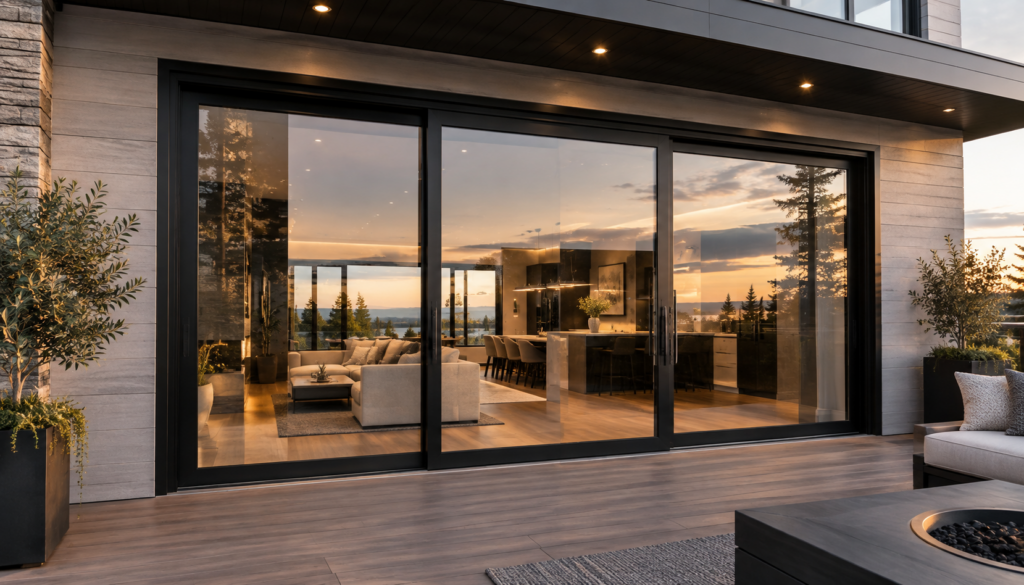
A deck or patio can function almost like an extension of the interior when the colours, materials, and proportions work together.
For example, outdoor furniture can complement the tones used indoors. Similar textures or colours can visually connect the two spaces.
Even flooring choices can influence the transition.
When the indoor and outdoor areas feel related, the patio door becomes more than a barrier between them. It becomes the point where the two environments meet.
This can be particularly effective in entertaining spaces where people naturally move between the kitchen, dining area, living room, deck, and backyard.
8. Frame the Patio Door With Thoughtful Decor
Decorating around the patio door can make it feel more intentional, but restraint is important.
Plants can work particularly well because they reinforce the connection between the interior and exterior.
A tall indoor plant positioned beside the door can soften a hard architectural edge. Smaller plants can add texture without obstructing the glass.
Artwork, a console table, decorative lighting, or carefully selected accessories can also help define the surrounding area.
However, avoid placing décor where it blocks the door’s operation or creates a safety hazard.
The best styling usually feels effortless.
The patio door should remain the star rather than becoming buried beneath decoration.
9. Consider the Floor Plan Before Choosing the Door
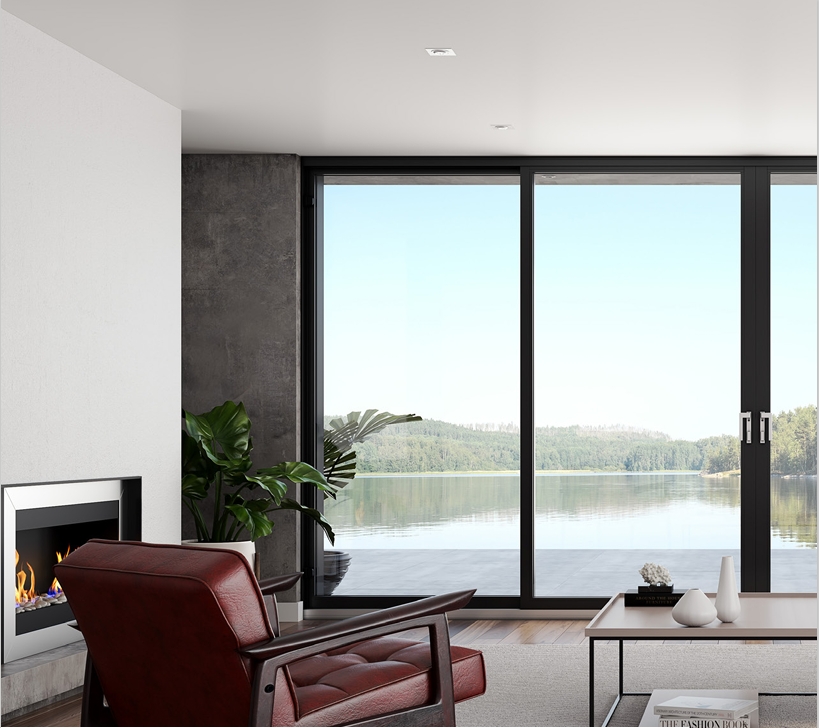
A patio door is both a design element and a functional part of the room.
Before selecting one, consider how people move through the space.
Where does the furniture sit?
How much clearance is available?
Does the door need to swing inward or outward?
Would a sliding configuration make more sense?
Where will people place furniture?
How will the door be used when the room is busy?
These questions matter because a door can look beautiful but still be frustrating if its operation interferes with the room.
A successful design balances appearance with everyday usability.
The best patio door is one that looks intentional when closed and functions naturally when people are moving through the space.
10. Think About Proportion and Scale
One of the most overlooked design considerations is proportion.
A patio door that is too visually small for a large wall can look insignificant. Conversely, a very large glass opening can dominate a smaller room if the surrounding design is not carefully considered.
Look at the entire wall rather than the door alone.
How much wall surrounds it?
Are there windows nearby?
How tall are the ceilings?
How large is the room?
How does the door relate to other architectural features?
When the proportions feel balanced, the patio door can become a natural focal point rather than appearing randomly placed.
11. Use the Patio Door to Make a Room Feel Larger
A well-designed patio door can create a strong visual connection between the interior and exterior, making the room feel more expansive.
The glass creates a sense of depth.
Instead of seeing a wall immediately beyond the room, your eye continues through the glass toward the deck, garden, or yard.
This can be particularly effective in smaller living areas.
Keeping the area near the door relatively open can strengthen the effect. Furniture with lighter visual profiles can also help maintain a sense of openness.
The patio door does not physically increase the room’s square footage, but it can change how that space is perceived.
12. Let the Door Complement Other Windows
If your room already has several windows, the patio door should ideally feel like part of the same family.
This does not necessarily mean every opening needs to look identical.
Instead, consider consistency in frame colour, glass appearance, proportions, and overall style.
For example, a modern patio door paired with similarly clean-lined windows can create a cohesive appearance.
When the openings throughout the room feel connected, the architecture becomes more visually unified.
13. Don’t Forget About Privacy and Light Control
Making a patio door a feature does not mean sacrificing practicality.
Large glass areas can provide beautiful views and natural light, but homeowners may also need privacy, particularly in the evening.
The solution is to incorporate privacy and light-control options without completely hiding the door.
Depending on the room and orientation, you might consider shades, blinds, curtains, or other suitable window treatments.
The key is flexibility.
During the day, the glass can remain open visually, allowing light and views to take priority. In the evening, window coverings can provide privacy when needed.
A feature should still work for everyday life.
14. Pay Attention to Energy Performance
A patio door is a major connection between the conditioned interior and the outdoors, so performance matters just as much as appearance.
When choosing a patio door, consider factors such as glazing, frame construction, weather sealing, and overall energy performance.
Energy-efficient glazing can help reduce unwanted heat transfer, while quality construction and proper weather sealing can contribute to a more comfortable interior.
This is particularly important in climates where temperatures can vary significantly throughout the year.
A patio door should not only look good. It should contribute to the comfort and performance of the home.
15. Make the Hardware Part of the Design
Hardware may seem like a small detail, but it can have a noticeable effect on the finished look.
Door handles and locks are among the elements people physically interact with every day, so they should feel appropriate to both the door and the room.
Depending on the design, hardware can blend quietly into the overall look or provide a subtle contrast.
Consider how the finish relates to other hardware throughout the room, including cabinet handles, lighting fixtures, and nearby doors.
Small details can create a surprisingly polished result.
16. Design the Outdoor Area as Part of the Composition
If your patio door opens onto a deck or patio, don’t stop the design conversation at the threshold.
The area immediately outside the door can influence what you see from inside.
Outdoor furniture, planters, lighting, landscaping, and even the positioning of a walkway can become part of the view framed by the glass.
Think of the patio door almost like a picture frame.
What would you like to see through it?
A carefully positioned planter or tree can create an attractive focal point. Outdoor lighting can transform the view after sunset. A well-designed seating area can make the exterior feel like a continuation of the interior.
When the outdoor space is thoughtfully arranged, the patio door becomes even more visually significant.
17. Don’t Sacrifice Function for Appearance
There is an important distinction between making a patio door a feature and making it purely decorative.
Your patio door still needs to perform its primary jobs.
It should provide convenient access, operate smoothly, offer appropriate security, and help protect the interior from the elements.
The strongest designs combine these practical requirements with thoughtful aesthetics.
In other words, you shouldn’t have to choose between a patio door that looks beautiful and one that works well.
With the right selection and planning, you can have both.
18. Think Beyond Trends
Interior design trends come and go, but a patio door is a long-term investment.
Instead of selecting a style simply because it is currently popular, consider whether it will continue to complement your home several years from now.
Clean proportions, quality materials, appropriate colours, and thoughtful functionality tend to have more staying power than overly trendy details.
A timeless patio door can adapt as your furniture, décor, and personal style change.
That makes it easier to update the room without having to replace the door simply because the surrounding design has evolved.
19. Let the Architecture Lead the Design
Every home has its own architectural language.
A patio door should respect that language rather than fighting against it.
A contemporary home may benefit from expansive glass, clean lines, and minimal framing.
A traditional home might suit a more structured door design with stronger visual detailing.
A transitional interior can provide opportunities to blend modern glass areas with more classic architectural elements.
Before choosing a patio door, look at the home’s existing windows, exterior materials, rooflines, trim, and interior finishes.
The best result usually comes when the patio door feels like it was always meant to be there.
20. Think of the Patio Door as a Focal Point
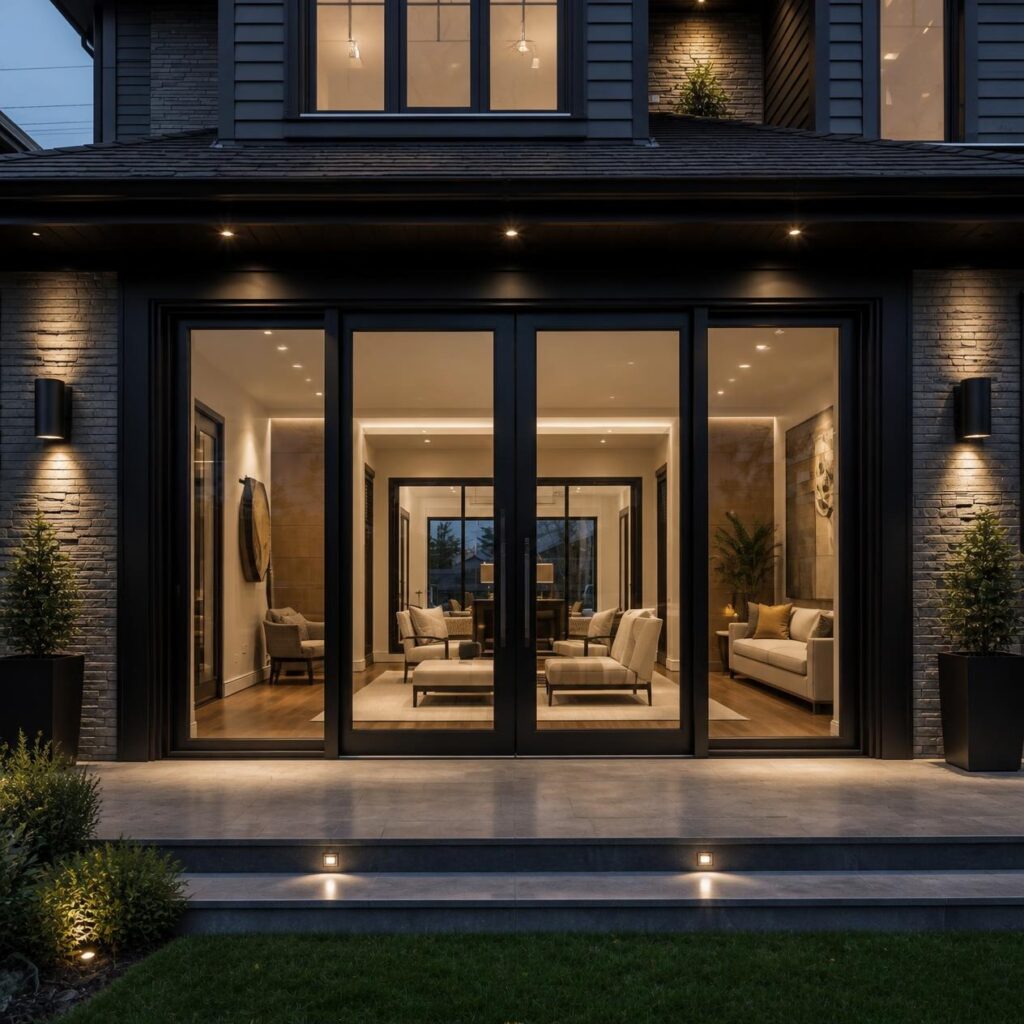
A great patio door does more than provide access to the outdoors. It can change how a room is experienced.
It can make morning light feel brighter, make a small room feel more open, and turn an ordinary backyard view into part of the home’s interior character.
When the door, room, and outdoor space are designed to work together, the result is more than a functional opening.
It becomes a feature that connects the home to everything beyond it.
And sometimes, that connection is what makes a room feel complete.
Make Your Patio Door Part of the Design
A patio door should do more than provide a way outside. With the right style, proportions, glass, finishes, and surrounding design, it can become one of the most distinctive features in your home.
Whether you’re creating a brighter living space, opening up a room to the outdoors, or giving your home a more polished and contemporary feel, the right patio door can make a noticeable difference.
At NORC Windows & Doors, we help homeowners find patio door solutions that balance style, natural light, functionality, comfort, and lasting performance. From choosing the right configuration to creating a seamless connection between your indoor and outdoor spaces, every detail matters.
Ready to make your patio door more than just an opening? Explore NORC’s patio door options and discover a design that brings your space together.