
A patio door is often thought of as a practical connection between the home and the outdoors. It gives you a way to step onto a deck, patio, or backyard while allowing natural light and outdoor views into the living space.
But a well-chosen patio door can do much more than that.
Because of its size, position, and amount of glass, a patio door can have a surprisingly strong influence on how a room looks and feels. It can make a space feel brighter, more open, and more connected to the outdoors. It can also change the way you experience the room throughout the day.
In many homes, the patio door occupies one of the largest glazed areas in a room. That makes it more than an opening – it becomes part of the architecture and, often, one of the room’s most noticeable visual features.
Whether you’re updating an older opening or planning a new renovation, thinking about the patio door as part of the overall room design can lead to a much more cohesive result.
Here are some of the ways the right patio door can transform a space.
1. Bring More Natural Light Into the Room
Natural light can completely change the atmosphere of a room.
A dark or enclosed space can feel noticeably more inviting when daylight is able to reach deeper into the interior. Large areas of glass allow sunlight and natural brightness to enter while creating a softer, more open visual environment.
This can be particularly effective in living rooms, dining areas, kitchens, and other spaces that face a backyard or outdoor entertaining area.
Instead of relying entirely on artificial lighting, the room can change naturally throughout the day as the sunlight shifts. Morning light can create a completely different atmosphere from the warmer light that enters later in the afternoon.
More Glass Can Change the Mood of a Space
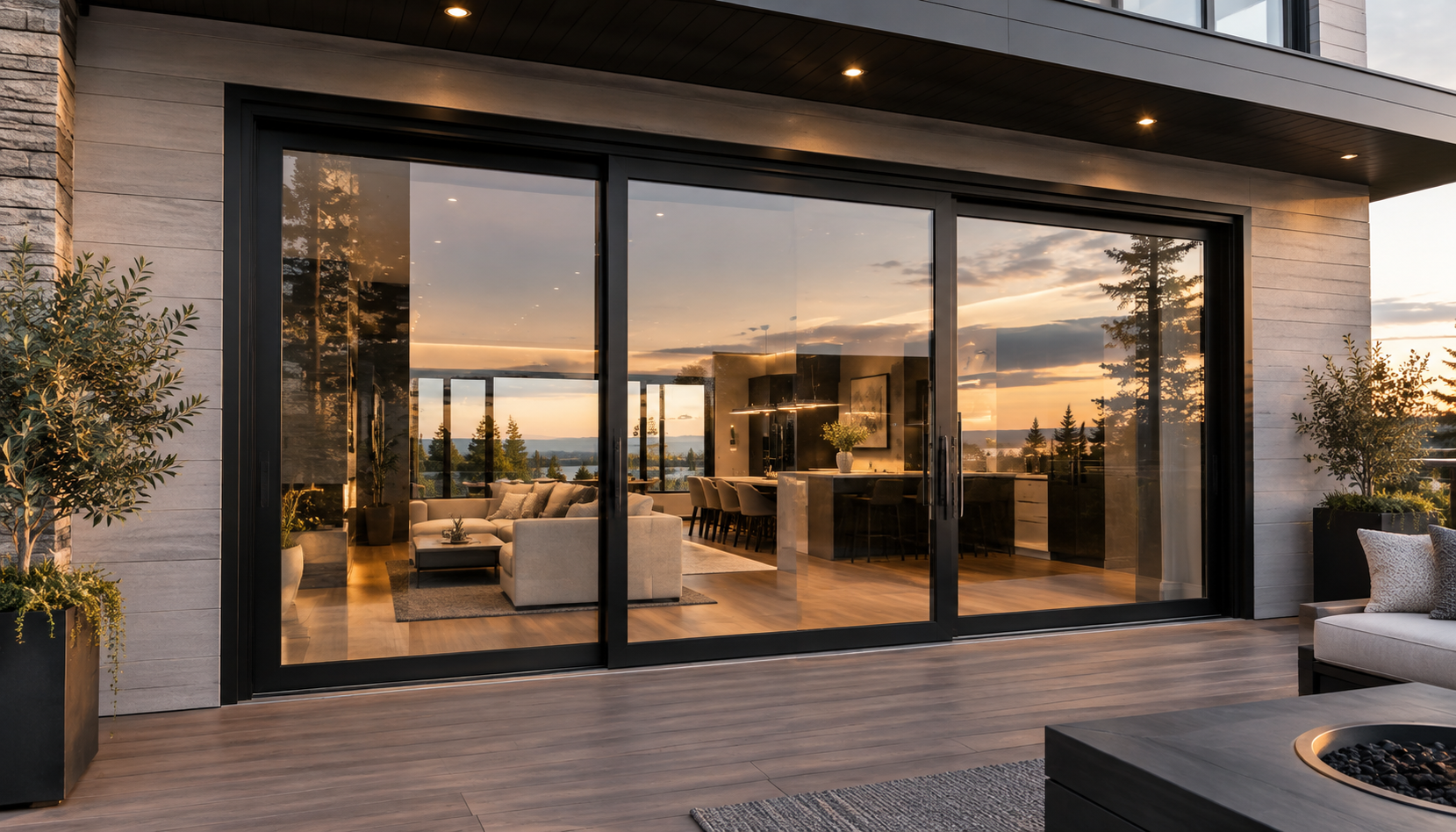
A larger glazed opening can make the transition between indoors and outdoors feel less defined. Rather than looking at the backyard through a relatively small opening, you experience more of the surrounding landscape from inside the room.
The result can be subtle but powerful: the room feels brighter without necessarily becoming physically larger.
Of course, the amount of daylight a room receives also depends on factors such as the direction the opening faces, nearby buildings, trees, and the home’s overall layout. Good design considers those factors rather than assuming that simply adding more glass will solve every lighting challenge.
2. Make a Room Feel Larger and More Open
One of the most noticeable effects of a large patio door is its ability to create a greater sense of space.
This doesn’t mean the room has gained square footage. Instead, the visual boundary between the interior and exterior becomes less dominant.
When you can see more of the area beyond the room, your eye naturally travels farther. A backyard, garden, deck, or patio becomes part of the visual composition.
This can make the interior feel less enclosed and more expansive.
The effect is especially valuable in rooms where walls or furniture already make the space feel somewhat confined. A strong visual connection to the outdoors can give the room another layer of depth.
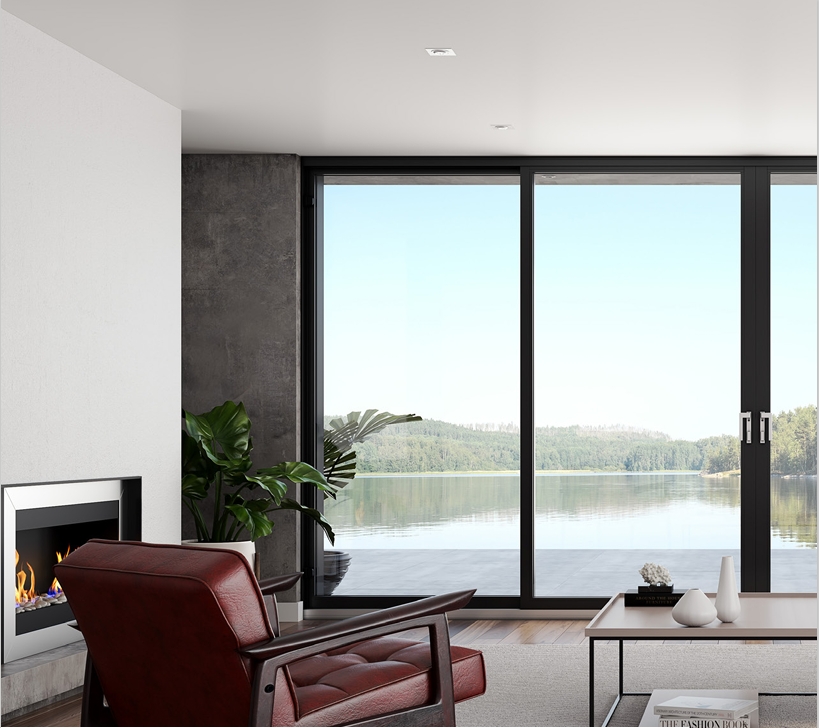
Let the eye travel beyond the room
Interior design isn’t only about what physically occupies a room. It’s also about what the eye perceives.
A large glass opening can create visual depth by extending your sightline beyond the walls. When the outdoor area is thoughtfully landscaped, that effect becomes even stronger.
A simple garden, mature tree, deck, or carefully planned outdoor seating area can become part of the room’s visual backdrop.
3. Create a Stronger Connection to the Outdoors
A home can feel very different when the outdoors becomes part of the everyday living experience.
A patio door creates a natural transition between the two spaces. During warmer seasons, it can make it easier to move between the living area and an outdoor entertaining space. Even when the door remains closed, the view beyond the glass can make the outdoors feel like an extension of the room.
This connection can be especially appealing when the home has a well-designed backyard, garden, deck, or patio.
Rather than treating the exterior as something you only see when you step outside, the patio door allows it to become part of the room’s visual experience.
Design the two spaces together
Think about the interior and exterior as connected spaces.
The colours, materials, furniture, landscaping, and lighting don’t have to match, but they should feel compatible.
A warm interior can work beautifully with natural landscaping. A clean contemporary room may pair well with a simple deck and streamlined outdoor furniture.
The patio door becomes the point where those two environments meet.
This approach can also make outdoor improvements feel more valuable because they are visible and appreciated from inside the home, not just when you’re using the backyard.
4. Improve the View From Inside
A patio door isn’t just something you walk through. It can also function like a large picture frame.
The view outside becomes part of what you see every time you use the room.
This means the position and size of the opening can influence the visual experience just as much as the door itself.
If the room overlooks a garden, mature trees, a landscaped backyard, or an attractive outdoor living area, a larger glass opening can help make that view a feature.
Think about what you see
Before choosing a patio door, consider the view from the main seating areas.
Where do you naturally sit in the room?
What do you see when you’re standing in the kitchen?
Where does your eye go when you enter the space?
A beautiful view deserves to be considered as part of the room’s design.
Even a relatively ordinary backyard can benefit from thoughtful framing. The right opening can emphasize the most attractive part of the view while reducing visual distractions elsewhere.
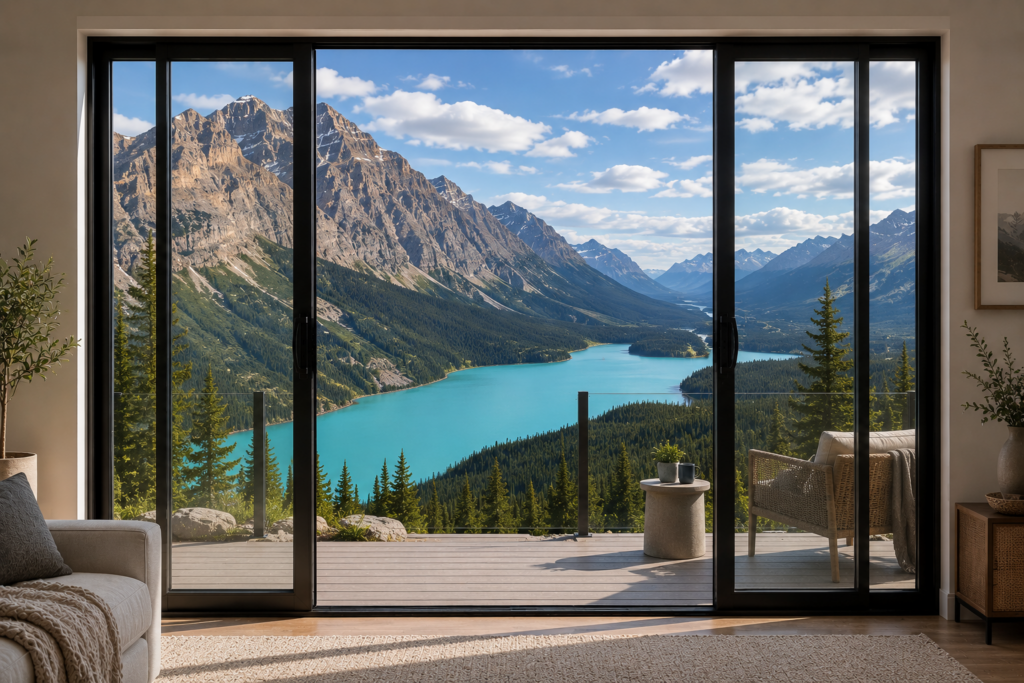
5. Give the Room a Clear Focal Point
Good interior design often depends on creating a visual focal point.
A fireplace, artwork, architectural feature, or statement piece of furniture might serve that role. In the right room, a patio door can do the same.
A large glazed opening naturally attracts attention because it introduces light, movement, and a view beyond the room.
Instead of fighting that feature with too many competing elements, consider making it part of the overall design.
Keep the surrounding area relatively clean and allow the glass and outdoor view to provide visual interest.
Let the view do some of the decorating
Trees, gardens, changing seasons, and natural light can provide visual variety without adding another decorative object to the room.
In that sense, a well-positioned patio door can become a living piece of the home’s design.
The view changes throughout the year, too. Greenery in summer, changing foliage in autumn, and snow-covered landscapes in winter can all create a different visual experience without changing anything inside the room.
6. Make Furniture and Layout Feel More Intentional
Changing a patio door can also influence how a room is arranged.
A large opening needs to be considered when positioning sofas, dining tables, chairs, shelving, and other furniture.
The goal isn’t simply to keep furniture away from the door. Instead, think about movement through the room and how the furniture relates to the view.
For example, a seating arrangement can be positioned so that people naturally face the outdoors while still leaving a comfortable path to the patio.
In a dining area, the door can help establish a natural relationship between the dining space and an outdoor entertaining area.
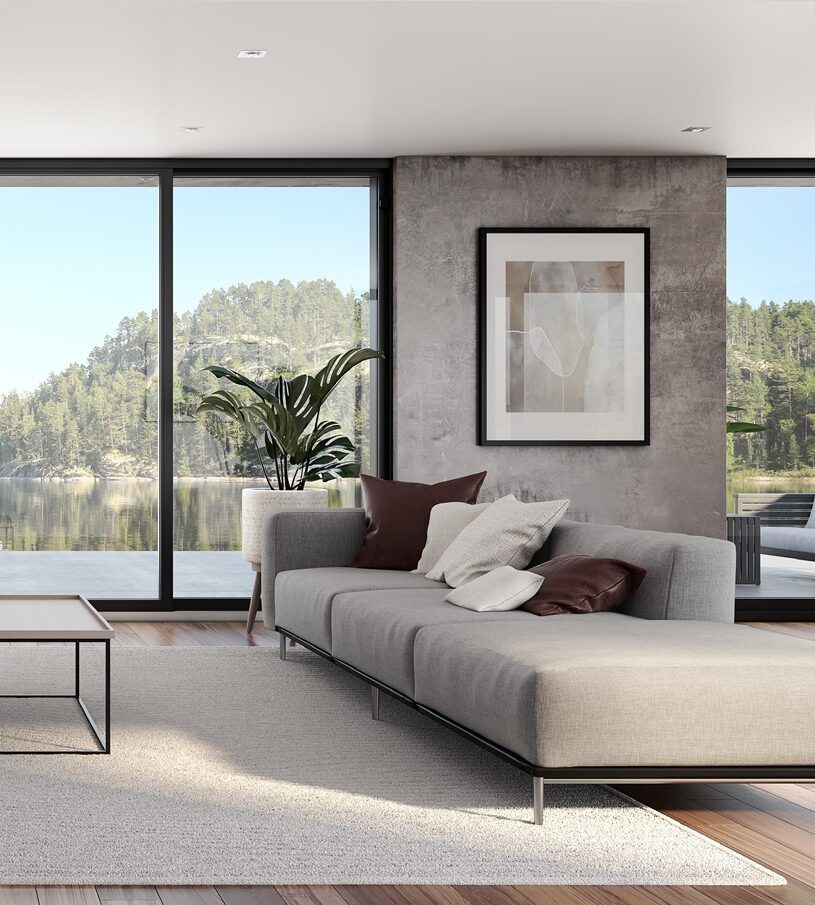
Function and design should work together
A beautiful room isn’t successful if the furniture blocks access or makes the door difficult to use.
Likewise, a practical layout can feel much more polished when the door, furniture, lighting, and surrounding features have been considered together.
The best designs make everyday movement feel effortless.
When planning a replacement, consider how much clearance is needed around the opening and how people naturally move through the room. A door should complement the layout rather than force the entire space to work around it.
7. Connect Interior and Exterior Design
Patio doors sit directly between two environments, which gives them an unusual role in home design.
They can help establish a visual relationship between your interior finishes and the exterior of your home.
Consider the frame colour, surrounding trim, flooring, wall colours, outdoor materials, and nearby windows.
A patio door doesn’t have to be identical to every other opening in the home, but it should feel like it belongs there.
Consistency creates a more polished appearance
When the patio door works with nearby windows and exterior elements, the result feels more cohesive.
This is particularly important when the door is visible from several areas of the home.
Instead of looking like a separate addition, it becomes part of the home’s overall architectural language.
You can create cohesion without making everything identical. Repeating a similar frame colour, coordinating hardware finishes, or using complementary proportions can be enough to make the spaces feel connected.
8. Choose a Style That Complements the Home
The style of patio door can influence the character of the room.
A clean, streamlined design can reinforce a contemporary interior, while a more traditional design may complement classic architectural details.
The choice should also consider the proportions of the opening and the surrounding windows.
A patio door that looks beautiful on its own may not necessarily be the right choice for the room. The strongest results come when the style, proportions, colour, and surrounding architecture work together.
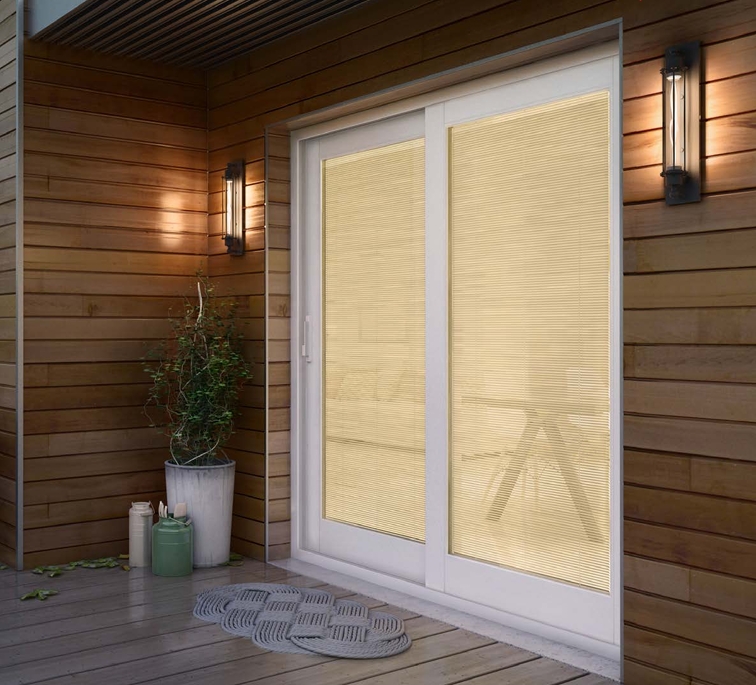
Don’t choose based on appearance alone
Think about how you use the room every day.
How often will the door be opened?
How much space is available around the opening?
Do you want a wide, unobstructed view?
How important is easy movement between indoors and outdoors?
These practical questions can help narrow down the design options while ensuring the finished result looks right.
The best-looking option is ultimately one that works with the way you live. A beautiful door that is awkward to operate or poorly suited to the available space can quickly become frustrating.
9. Think About Light, Privacy and Comfort Together
More glass can bring more light and a stronger connection to the outdoors, but good design also considers privacy and comfort.
The amount of sunlight entering the room can change throughout the day. Depending on the orientation of the home, direct sunlight may be welcome at certain times and stronger than desired at others.
Window coverings, furniture placement, landscaping, and the type of glass can all contribute to how comfortable the space feels.
The goal is not simply to maximize glass.
It’s to create a space where light, views, privacy, and everyday comfort work together.
For rooms that face a neighbouring property or a frequently used outdoor area, privacy deserves particular attention. Landscaping and appropriate window coverings can help maintain a sense of openness without sacrificing comfort.
10. Make the Transition Between Inside and Outside Feel Natural
A patio door can influence more than what you see. It can also influence how naturally the interior and exterior spaces flow into one another.
Think about the flooring inside and the materials immediately outside the door. The two don’t need to be identical, but similar tones or complementary textures can make the transition feel more intentional.
Lighting can have a similar effect. Interior lighting that works with exterior lighting can make the doorway feel connected after sunset rather than creating a harsh visual divide.
Even small details around the opening—such as trim, curtains, furniture, and outdoor seating—can reinforce that sense of continuity.
The result is a space that feels designed as a whole rather than as separate indoor and outdoor areas.
11. A Small Architectural Change With a Big Visual Impact
Replacing a patio door may seem like a relatively straightforward home improvement, but its visual impact can extend far beyond the door itself.
A new opening can change how light enters the room.
It can alter the way furniture is arranged.
It can improve the view.
It can make the room feel more connected to the backyard.
And it can influence how the interior and exterior spaces relate to one another.
That is why patio doors deserve to be considered as part of the home’s overall design rather than simply as a functional passage to the outdoors.
A thoughtful replacement can refresh an older room without requiring a complete renovation. Sometimes, improving one major architectural element is enough to change the character of the space around it.
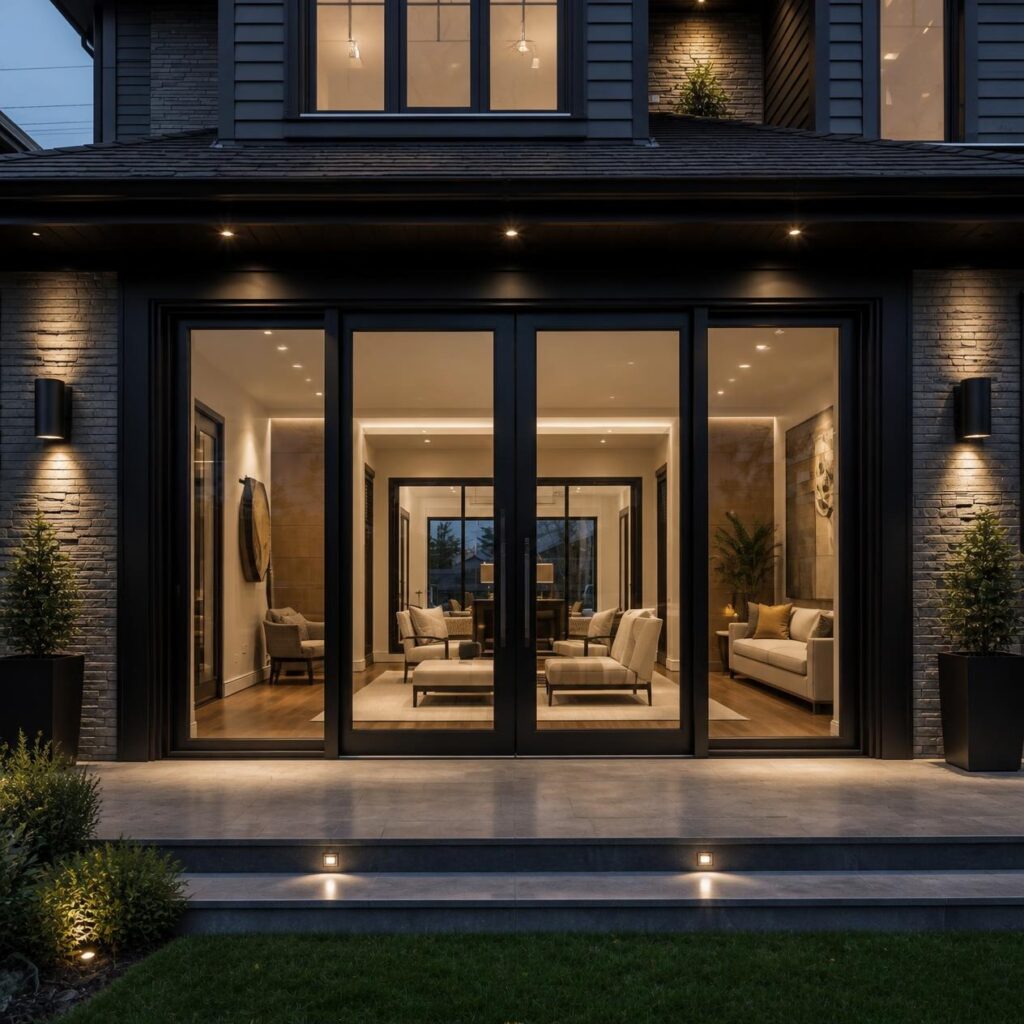
The Right Patio Door Can Change More Than the Doorway
The most successful home improvements don’t simply add something new. They improve the way the existing space looks, feels, and functions.
A thoughtfully chosen patio door can do exactly that.
It can bring natural light deeper into the home, create a stronger connection with the outdoors, frame a beautiful view, and make an everyday living space feel more open and inviting.
The key is to look beyond the door itself.
Consider the room, the view, the surrounding architecture, the available space, and the way you actually use the area. When all of those elements work together, a patio door can become one of the most meaningful design features in the room.
Thinking About Updating Your Patio Door?
If you’re considering a new patio door, NORC Windows & Doors can help you explore options that complement your home’s style while supporting the way you use your space.
Whether your goal is to bring in more natural light, create a stronger connection to the outdoors, or simply give a room a fresh new look, the right patio door can make a noticeable difference.
Sometimes, changing the way you see the outdoors starts with changing the way you see the doorway.