
Your entry door is one of the first details people notice when they approach your home. It sets the tone for the exterior, creates the first impression for guests, and can influence how polished and welcoming the entire property feels.
A home doesn’t necessarily need an oversized entrance, expensive materials, or an elaborate façade to look sophisticated. Often, the difference comes down to thoughtful design choices. The right door style, proportions, colour, glass, hardware, and surrounding details can make an entrance feel significantly more intentional and refined.
The good news is that creating a more elevated look doesn’t mean following a single design trend. A contemporary home may call for clean lines and large glass panels, while a traditional property may look better with classic detailing and carefully proportioned decorative elements.
If you’re considering updating your entrance, here are 10 entry door design ideas that can give your home’s exterior a more polished and sophisticated appearance.
1. Choose a Door With Strong Architectural Presence
A beautiful entry door doesn’t have to be complicated. In many cases, the most sophisticated designs are defined by their proportions, clean lines, and visual balance.
Your front door should have enough presence to stand confidently within the façade without looking disconnected from the rest of the home. A door that feels too small can make the entrance appear underwhelming, while an oversized or heavily decorated design can compete with the architecture.
Consider the overall shape of your home when selecting a door. Clean, contemporary architecture often pairs well with simple door profiles, larger glass areas, and minimal detailing. Traditional or transitional homes may benefit from more classic proportions, panel designs, or carefully selected decorative elements.
The goal is not simply to choose an impressive door. It is to choose one that looks as though it belongs there.
A well-proportioned entrance can make the entire front elevation feel more intentional, and that sense of cohesion is one of the details that often separates an ordinary-looking exterior from a refined one.
2. Use Glass to Add Light and Visual Interest
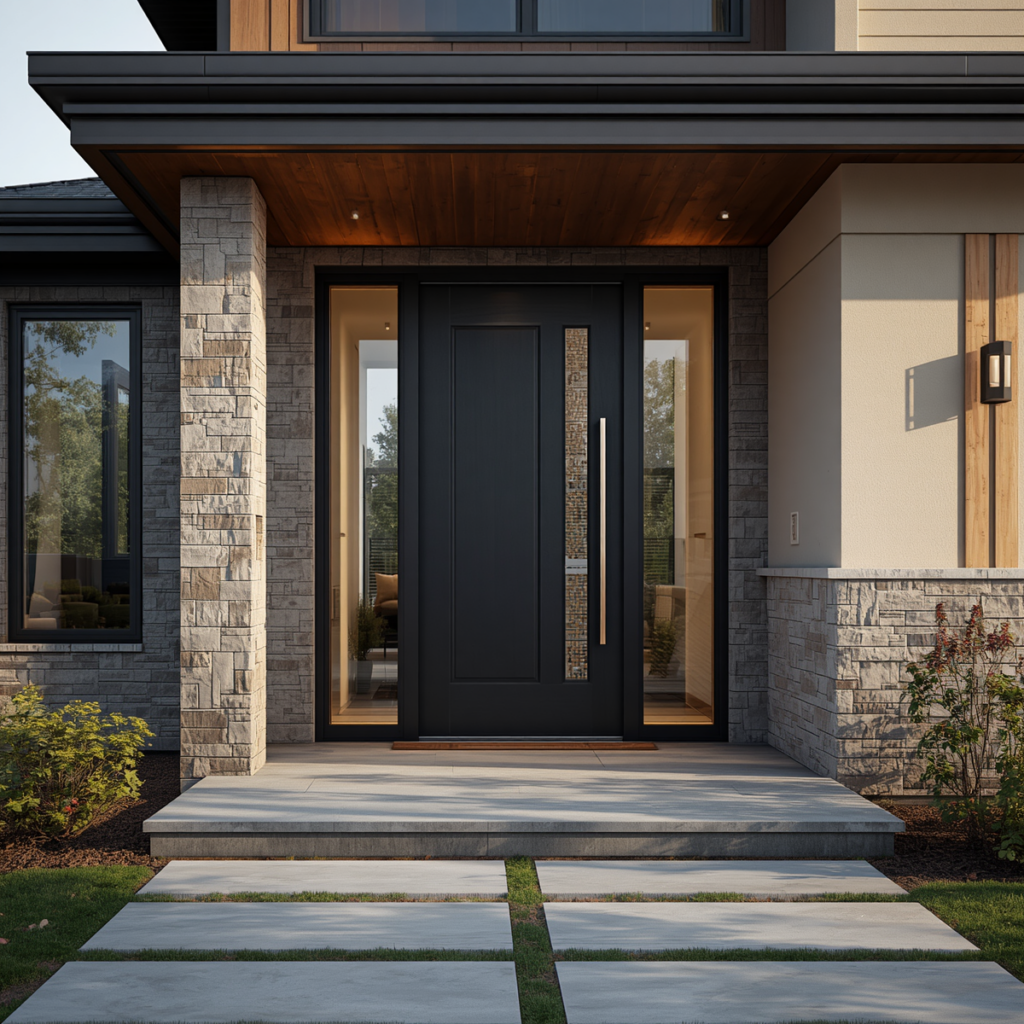
Glass can completely change the character of an entry door.
Beyond allowing natural light into the entrance, glass introduces another visual layer to the exterior. Depending on the design, it can make a door feel lighter, more contemporary, more elegant, or more distinctive.
Large glass panels can create a modern appearance and help brighten an entryway. Smaller decorative glass inserts can provide visual interest while maintaining a more traditional character.
The type and placement of glass matter, too. A tall vertical glass panel can emphasize height, while strategically positioned smaller panes can complement a more classic architectural style.
Privacy should also be considered. Clear glass may provide maximum light, but textured, patterned, or otherwise privacy-oriented glass can allow light into the entrance while reducing visibility from outside.
This is where design and function can work together. The best entry door isn’t simply attractive from the street, it should also make sense for how you use the space.
3. Select a Colour That Creates Intentional Contrast
Colour is one of the simplest ways to give an entryway more personality.
A front door can either blend with the surrounding exterior or become a deliberate focal point. Neither approach is inherently better. What matters is whether the colour works with the home’s architecture and existing exterior finishes.
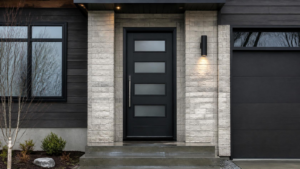
A darker door can create a strong, sophisticated contrast against a lighter exterior. Black, deep charcoal, rich brown, and other darker tones can create a dramatic appearance without relying on excessive ornamentation.
For a softer look, consider a colour that complements the surrounding siding, brick, stone, or trim rather than creating a sharp contrast.
The important thing is to avoid choosing a colour in isolation.
Look at the entire entrance. Consider the roof, exterior walls, garage door, trim, landscaping, and other visible elements. Your entry door should feel like part of the overall exterior design rather than an unrelated accent.
Even a relatively simple door can look remarkably polished when its finish works in harmony with the rest of the home.

4. Don’t Underestimate the Impact of Hardware
Hardware may be a relatively small part of an entry door, but it can have a surprisingly large effect on the finished look.
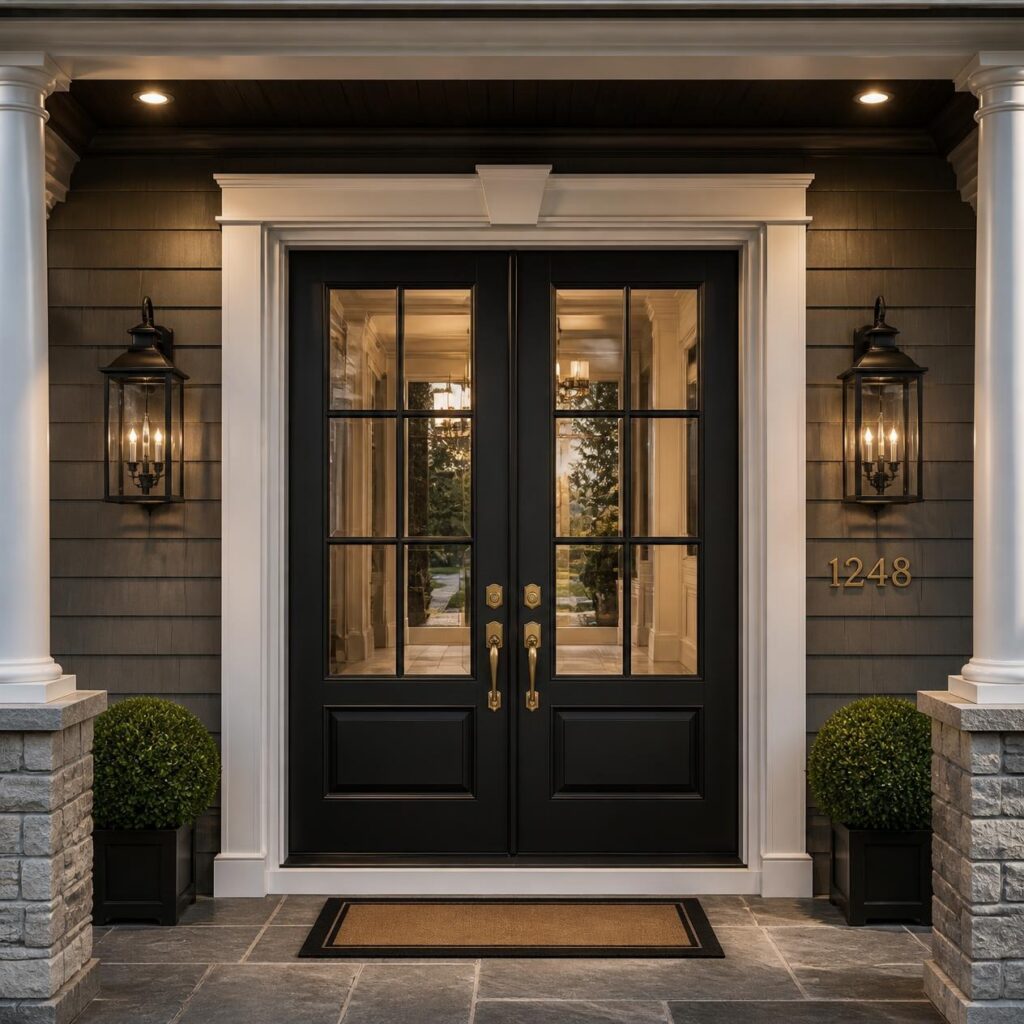
The handle, lockset, hinges, and other visible hardware should complement the character of the door. On a contemporary design, clean and streamlined hardware can reinforce the minimalist aesthetic. On a more traditional entrance, hardware with subtle detailing may feel more appropriate.
Finish matters as well.
Black hardware can create crisp contrast. Brushed or satin finishes can provide a quieter, understated appearance. Other metallic finishes can introduce warmth or coordinate with existing exterior fixtures.
The key is consistency.
If the entrance already has exterior lighting, house numbers, railings, or other visible metal details, consider how the door hardware relates to them. Matching everything exactly isn’t necessary, but a sense of coordination can make the entrance feel much more considered.
It’s often these smaller details that complete the overall design.
5. Pay Attention to Proportion and Scale
One of the biggest secrets behind an expensive-looking exterior isn’t necessarily the price of the materials. It’s proportion.
A door should make visual sense within the surrounding entrance.
Consider the height and width of the doorway, the amount of wall surrounding it, the size of nearby windows, and the overall scale of the home. A substantial house may benefit from a stronger entry composition, while a smaller home may look best with a simpler, more restrained design.
The surrounding space matters too.
If the entrance includes sidelites, a transom, or additional glass, these elements can change the perceived scale of the doorway. Together, they can create a more substantial entrance without relying on unnecessary decoration.
Think of the entry as a composition rather than a single product.
The door, glass, trim, surrounding walls, lighting, steps, and landscaping should all work together. When those elements are properly proportioned, the result tends to look naturally sophisticated.
6. Consider Sidelites and transoms
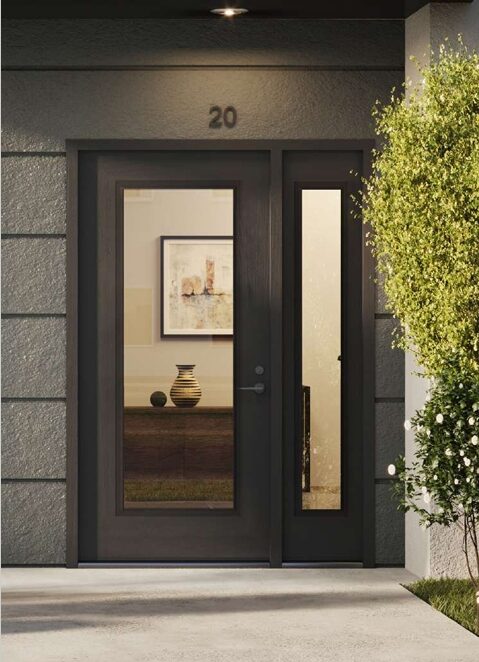
If you want your entrance to feel more spacious and visually impressive, sidelites and transoms are worth considering.
Sidelites are narrow glass panels positioned beside the door, while a transom is a window placed above it. Depending on the home’s architecture, either option can add light, height, and visual balance to an entryway.
A pair of sidelites can create a symmetrical and substantial entrance. A transom can emphasize the verticality of the doorway and bring additional daylight into the space.
These features can be especially effective when the main door itself has a relatively simple design. Rather than adding more decorative details to the door, you can create visual interest through the overall configuration.
However, more isn’t always better.
The proportions of the sidelites or transom should suit the doorway and the architecture. An overly elaborate configuration can make a smaller entrance feel crowded.
When thoughtfully designed, these additional elements can make a standard doorway feel much more architectural.

7. Coordinate the Door With Your Home’s Exterior Materials
Your entry door should not exist visually on its own.
Look at the materials surrounding the entrance. Brick, stone, siding, stucco, wood accents, metal roofing, trim, and other exterior finishes all contribute to the home’s character.
A modern door with clean lines may work beautifully against a minimalist exterior with simple siding and contemporary finishes. A more traditional door may complement brick, stone, or classic architectural detailing.
Colour and texture can also be coordinated.
For example, a door with a warm finish can complement natural stone or other warm-toned exterior materials. A darker finish can provide contrast against lighter siding or masonry.
The objective isn’t to make every element identical.
In fact, too much matching can make an exterior feel flat. Instead, look for relationships between materials—contrast, repetition, complementary tones, and consistent design language.
When these elements work together, the entrance can feel significantly more sophisticated.
8. Create Contrast Without Creating Chaos
Contrast is one of the most powerful tools in exterior design.
A contrasting entry door can immediately draw attention to the entrance and create a focal point. But contrast works best when it is intentional.
You might create contrast through colour, texture, glass, hardware, or even the shape of the door.
For example, a dark door against a lighter exterior can create a strong visual anchor. Alternatively, a lighter door surrounded by darker materials can produce a softer but equally noticeable effect.
The important distinction is between contrast and clutter.
An entrance doesn’t need multiple competing colours, decorative patterns, oversized hardware, elaborate glass, and numerous architectural details to stand out.
Usually, one or two strong design decisions are enough.
If the door itself is visually dramatic, consider keeping the surrounding elements relatively restrained. If the door is simple, the surrounding architecture, lighting, or landscaping can provide additional character.
Refined design often comes from knowing when to stop.

9. Design the Entire Entrance, Not Just the Door
Even the most beautiful entry door can lose some of its impact if the area around it feels neglected.
Think beyond the door itself.
Exterior lighting can highlight the entrance after dark while providing practical illumination. House numbers can add a clean architectural detail. Landscaping can frame the doorway and guide attention toward it.
The walkway and steps matter as well.
A well-maintained path creates a natural transition toward the entrance, while thoughtful landscaping can soften hard architectural lines. A simple planter, carefully positioned greenery, or complementary exterior lighting may be enough to make the entrance feel finished.
Inside the home, the same principle applies.
If your entryway is visible through the door’s glass, think about what someone sees when approaching the house. A clean, uncluttered interior, coordinated flooring, and thoughtful lighting can reinforce the impression created by the exterior.
The entrance is ultimately a transition between outside and inside.
Treating that entire transition as one design space can produce a much more cohesive result.
10. Choosing Beauty That Also Performs
A refined entry door should look good, but it shouldn’t be designed purely for appearance.
Your front entrance is exposed to changing weather, temperature fluctuations, moisture, sunlight, and everyday use. The door needs to perform as well as it looks.
Energy performance, durability, weather resistance, glass selection, hardware quality, and overall construction should all be considered when choosing a new entry door.
This is especially important because a visually beautiful door that doesn’t perform well can quickly become frustrating.
Look for a design that balances aesthetics with the practical requirements of your home. Consider how much natural light you want, the level of privacy you need, how frequently the entrance is used, and what kind of exterior conditions it will experience.
This balance is what turns good design into smart design.
A sophisticated entrance shouldn’t simply make your home look better. It should provide comfort, functionality, and dependable performance for years to come.
What Makes an Entry Door Look Expensive
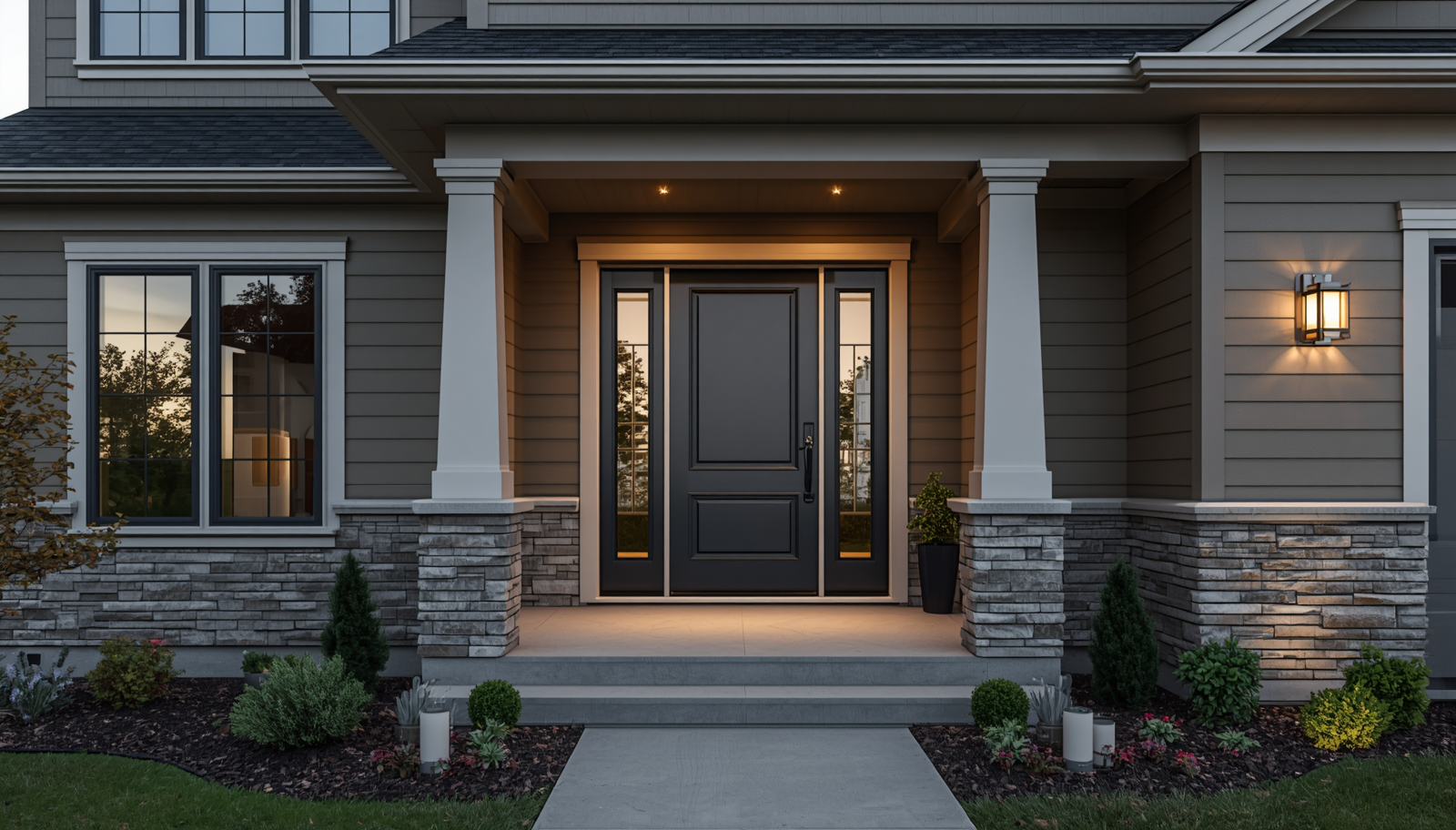
There isn’t one specific feature that automatically makes an entry door look expensive.
Instead, the effect usually comes from several design choices working together.
Proportion makes the entrance feel balanced.
Colour creates either harmony or intentional contrast.
Glass introduces light and visual interest.
Hardware adds the finishing touch.
Surrounding materials establish context.
Lighting and landscaping complete the composition.
Most importantly, the entrance should feel intentional.
A door doesn’t need elaborate decoration to make a strong impression. In many cases, a clean design with carefully chosen materials, excellent proportions, and a thoughtful finish can feel more sophisticated than a door covered in unnecessary details.
That’s why it helps to think about the entry as a complete design rather than simply selecting a door from a catalogue.
A Refined Entry Starts With the Right Design
Your front entrance plays a bigger role in your home’s appearance than you might expect. It welcomes guests, creates the first impression from the street, and establishes a visual connection between the exterior and interior of your home.
The right entry door can become a natural focal point without overpowering the architecture.
Whether you prefer a clean contemporary look, a timeless traditional style, or something in between, the most successful designs usually come down to thoughtful choices. Consider the architecture of your home, the surrounding materials, the amount of glass and natural light you want, your preferred colour and finish, and the smaller details that bring everything together.
And remember: making a home look more refined isn’t about making everything bigger or more elaborate.
It’s about making every element feel like it belongs.
Make a Stronger First Impression With NORC
Your entry door should be more than a way into your home. It should complement the architecture, reflect your style, and create an entrance that feels welcoming from the very first glance.
At NORC Windows & Doors, we understand that the details matter. From door style and glass to finishes and overall configuration, the right combination can make a meaningful difference to the look and feel of your home’s entrance.
If you’re considering a new entry door, explore NORC’s entry door options and discover a design that brings together style, comfort, functionality, and lasting performance.
Ready to give your entrance a more refined look? Explore Entry Doors and find a style that feels right for your home.