
A patio door does much more than connect your home to the outdoors.
It influences how much natural light enters your living space, how comfortably your home holds heat during winters, how easily you move between your house and backyard, and even how your home looks from both the inside and outside.
Yet choosing a patio door is rarely as simple as picking between sliding or French doors.
Frame materials, glass packages, energy ratings, hardware, security features, and installation quality all play a role in how well a patio door performs over the next 20 years—not just on installation day.
Whether you’re replacing an aging patio door, renovating your home, or building a new outdoor living space, understanding these factors can help you make a confident decision.
This guide walks through everything homeowners should consider before investing in a new patio door.
1. Start by Thinking About How You Use the Space
Before comparing styles or prices, think about how your patio door fits into everyday life.
Some homeowners use their patio door dozens of times a day to let children or pets into the backyard. Others use it mainly to maximize natural light in the living room. The best choice depends on how the space functions.
Ask yourself:
- Is this my primary access to the backyard?
- Do I entertain outdoors frequently?
- Is maximizing natural light a priority?
- Do I want better energy efficiency?
- Is the room often too cold in winter or too warm in summer?
- Will furniture affect how the door opens?
Answering these questions first makes every other decision easier.
2. Choose the Right Patio Door Style
The biggest visual and functional decision is the door style itself.
Each type creates a different experience inside the home.
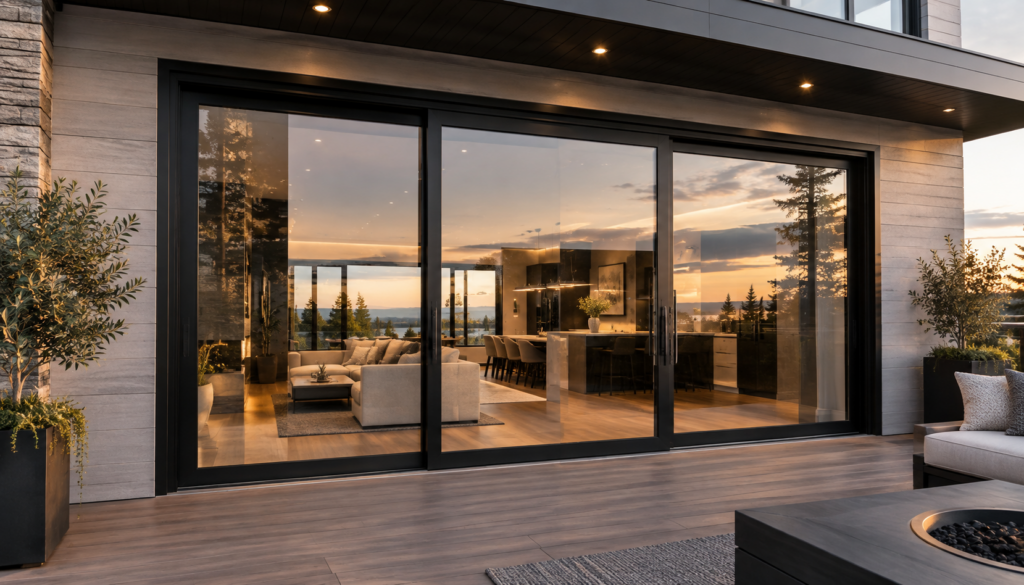
Sliding Patio Doors
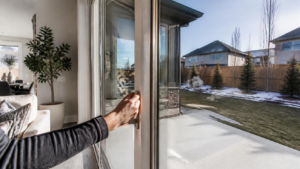
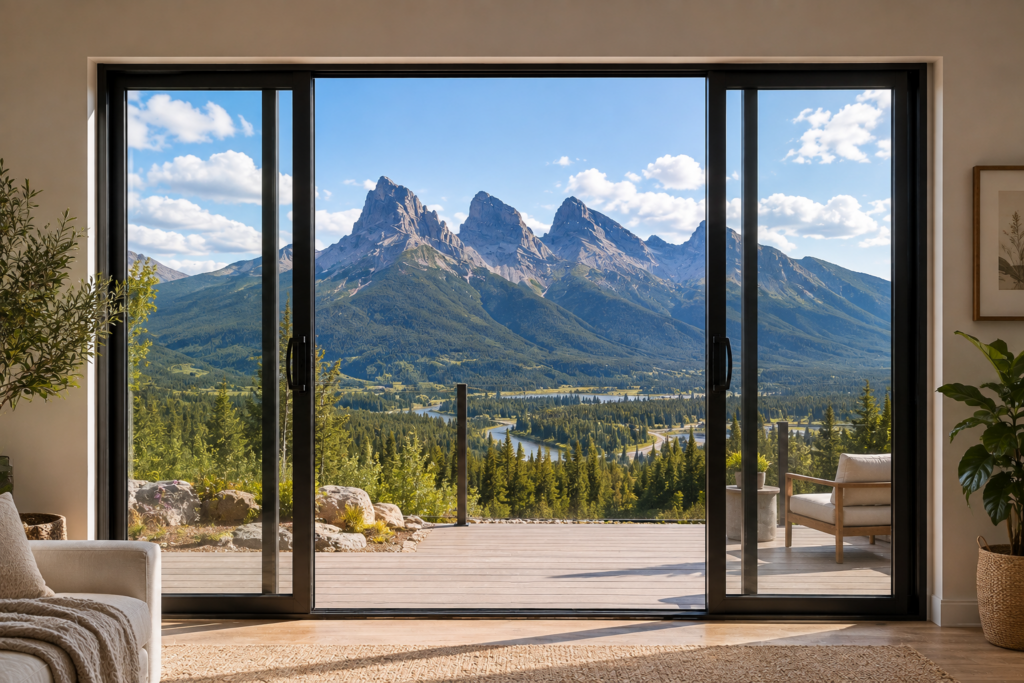
Sliding patio doors remain one of the most popular choices for Canadian homes.
Instead of swinging open, one or more panels glide horizontally along a track, making them an excellent solution when floor space is limited.
Best suited for:
- Everyday family use
- Smaller rooms
- Decks and patios
- Contemporary homes
- Homes where furniture sits near the doorway
Their large glass panels also help maximize daylight without requiring additional clearance.
French Patio Doors
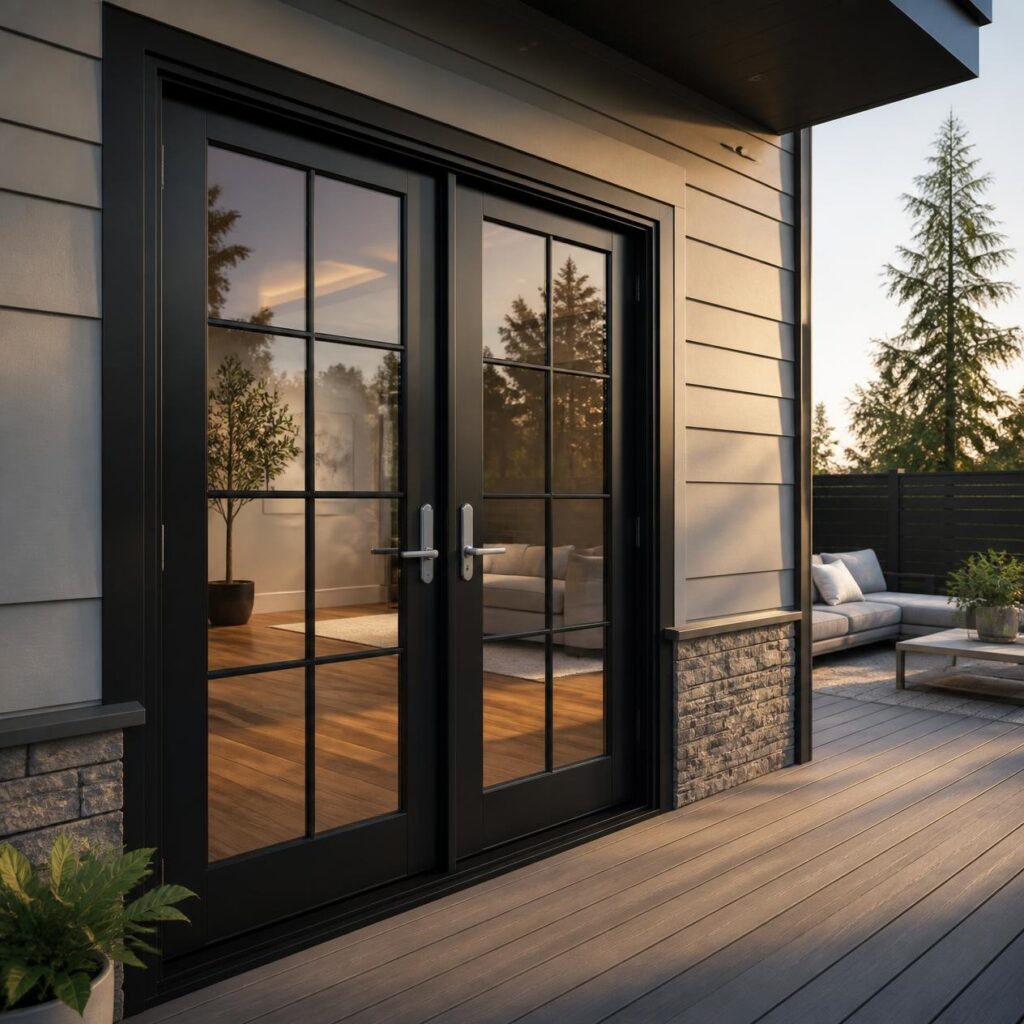
French patio doors use hinged panels that swing open.
They create a wider opening and often become an architectural feature themselves.
They’re especially attractive for homeowners who want a more traditional or elegant appearance.
Best suited for:
- Larger openings
- Traditional homes
- Homes with generous interior or exterior clearance
- Entertaining spaces
Multi-Panel System
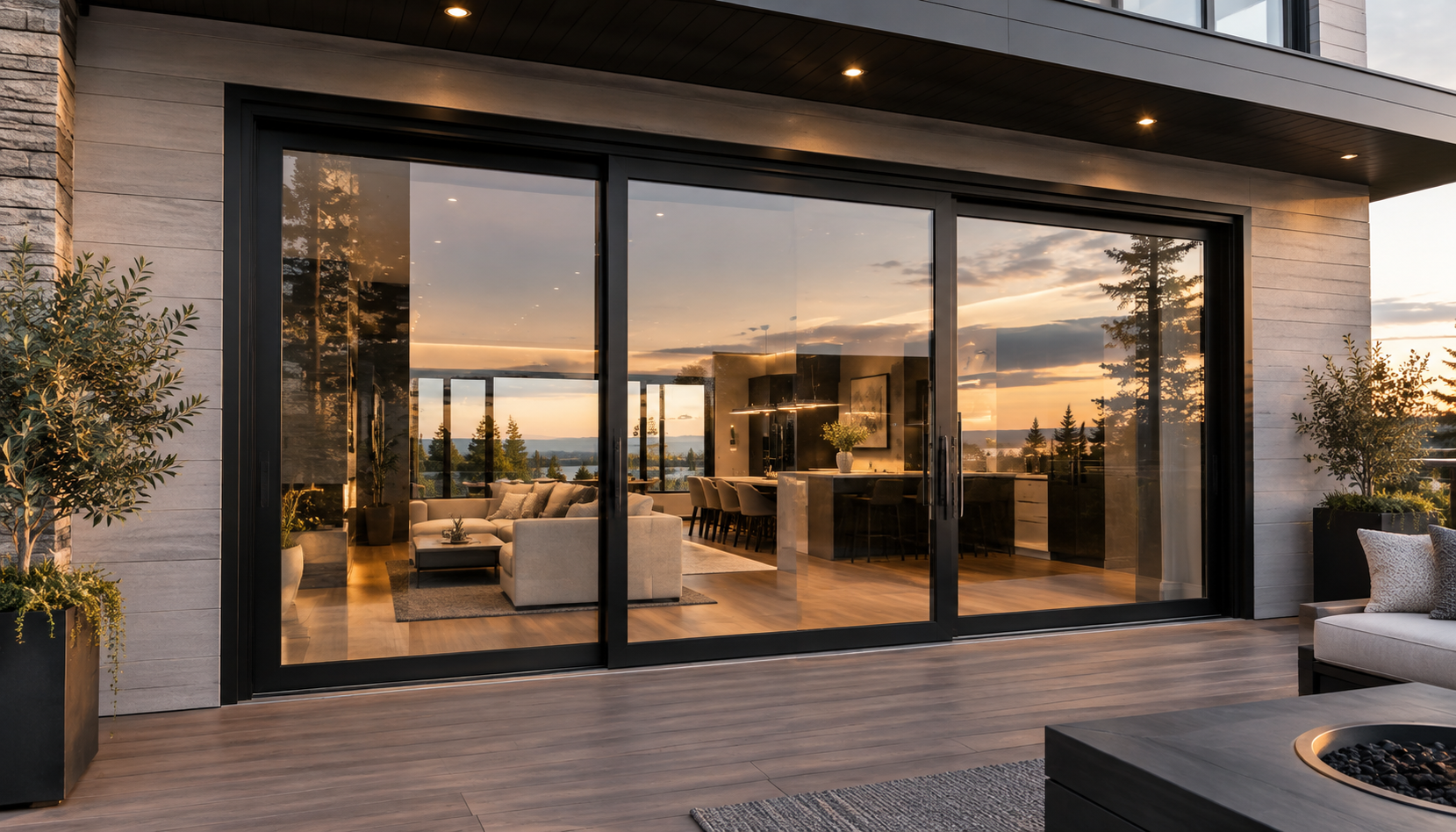
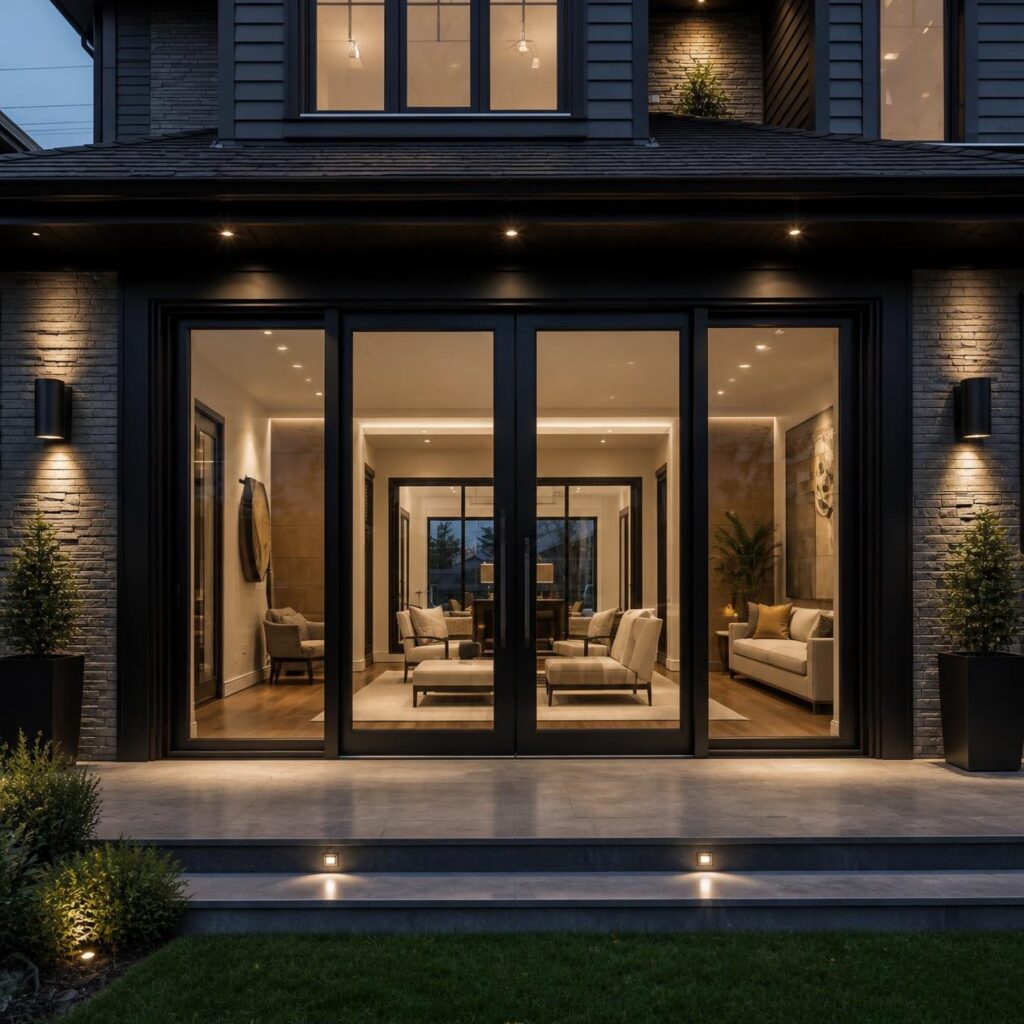
For larger renovations, multi-panel systems can create an expansive connection between indoor and outdoor living areas.
Multi-panel patio doors are particularly well suited for:
- Open-concept living and dining areas
- Large backyard patios and decks
- Homes with wide exterior openings
- Modern and contemporary home designs
- Homeowners who frequently entertain outdoors
While they offer impressive visual impact, they’re also a larger investment than standard patio doors. Before choosing one, consider whether your home’s layout, structural opening, and budget make the wider opening worthwhile. The best multi-panel system should complement how you actually use the space—not simply create the biggest opening possible.
These systems aren’t necessary for every home, but they can dramatically transform how a space feels.
3. Think Beyond Style: How the Door Actually Operates
Two beautiful patio doors can feel completely different to use.
Operation matters just as much as appearance.
Consider:
- Traffic flow
- Furniture placement
- Deck railings
- Walkways
- Children’s safety
- Accessibility needs
A swinging door that hits a dining chair every day quickly becomes frustrating, while a sliding door may preserve valuable living space.
Choose a door that works naturally with the room, not against it.
4. Frame Material Matters More Than Many Homeowners Realize
The frame affects insulation, durability, maintenance, and appearance.
Rather than asking which material is “best,” ask which one best matches your priorities.
Vinyl
Vinyl remains one of the most popular choices because it combines good insulation with relatively low maintenance.
Quality vinyl frames can perform exceptionally well in Canadian climates while offering excellent long-term value.
Fiberglass
Fiberglass offers impressive strength and dimensional stability.
It can withstand significant temperature changes while requiring relatively little ongoing maintenance.
Aluminum
Modern aluminum systems are known for their slim profiles and contemporary appearance.
Depending on the design, thermal performance can vary, so compare complete system specifications rather than assuming all aluminum doors perform the same way.
Wood
Wood delivers timeless character and warmth.
However, it generally requires more maintenance because natural materials respond to moisture and changing weather conditions.
When comparing materials, consider:
- Thermal performance
- Maintenance requirements
- Warranty
- Durability
- Appearance
- Budget
5. The Glass Package Is One of the Most Important Decisions
Most of your patio door is glass.
That makes the glazing package one of the biggest factors affecting comfort throughout the year.
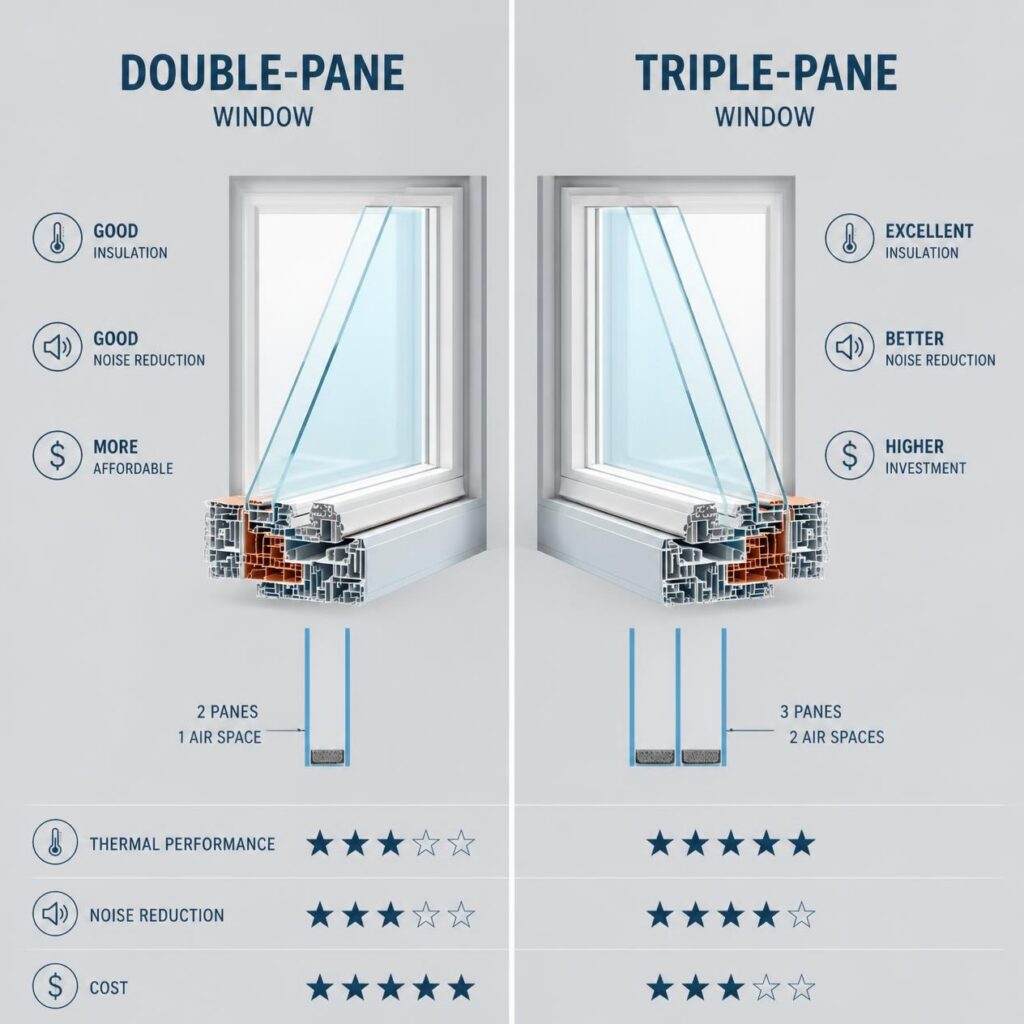
Double-Pane Glass
Double-pane doors use two panes separated by an insulating space.
They represent a substantial improvement over older single-pane systems.
Triple-Pane Glass
Triple-pane doors add an additional pane and insulating space.
For Calgary homeowners dealing with long winters and dramatic temperature swings, triple-pane glazing can improve indoor comfort by reducing heat transfer and helping interior glass surfaces stay warmer during cold weather. The overall performance, however, depends on the complete door system, not simply the number of glass panes.
6. Understand Low-E Coatings and Argon Gas
These two features often appear in product brochures, but many homeowners aren’t sure what they actually do.
Low-E Glass
Low-emissivity (Low-E) coatings are microscopic coatings applied to the glass.
They help control heat transfer and solar radiation, improving comfort throughout the year.
Different Low-E configurations are designed for different climates and sun exposure.
Argon Gas
The space between glass panes is often filled with argon rather than ordinary air.
Argon helps reduce heat transfer through the glazing unit.
When comparing patio doors, look at the complete glazing package instead of focusing on a single feature.
7. Don’t Ignore Energy Performance Ratings
Marketing terms like “energy efficient” don’t tell the whole story.
Canadian patio doors are evaluated using standardized performance measurements that make comparing products much easier.
U-Factor
U-factor measures how quickly heat moves through the door.
Lower numbers generally indicate better insulation.
Energy Rating (ER)
Energy Rating combines multiple factors—including heat loss, solar heat gain, and air leakage—into one overall performance value.
Higher ER values generally indicate stronger overall performance.
Air Leakage
Even an insulated door can feel uncomfortable if air leaks around it.
Lower air leakage values generally indicate a tighter, better-sealed product.
These standardized measurements provide a much more meaningful comparison than general marketing claims.
8. Look for ENERGY STAR Certification
One of the easiest ways to narrow your options is to look for ENERGY STAR® certified patio doors.
In Canada, certified windows and doors are tested against established performance standards and verified by independent certification bodies. Current residential criteria include either a maximum U-factor of 1.22 W/m²K or a minimum Energy Rating (ER) of 34, along with air-leakage requirements.
For homeowners, this certification offers a useful starting point because it provides an independent benchmark rather than relying solely on marketing terms like “high efficiency” or “premium insulation.” It gives you confidence that a product has met recognized Canadian performance requirements.
However, certification shouldn’t be the only factor guiding your decision.
Two ENERGY STAR certified patio doors can still perform differently depending on their frame construction, glass package, weatherstripping, and overall design. That’s why it’s worth comparing the actual performance values—particularly U-factor, Energy Rating, and air leakage, alongside the certification itself.
For Calgary homeowners, where cold winters and significant temperature swings are part of everyday life, choosing a certified patio door with strong overall performance can contribute to a more comfortable home while helping reduce unnecessary heat loss throughout the year.
9. Think About Sunlight and Door Orientation
A patio door facing south behaves differently from one facing north.
Sun exposure influences:
- Indoor temperatures
- Glare
- Solar heat gain
- Comfort
A heavily sun-exposed west-facing patio door may benefit from different glazing characteristics than one installed on a shaded side of the home.
Natural Resources Canada recommends considering both orientation and solar exposure when evaluating glass performance.
10. Privacy Doesn’t Have to Mean Losing Natural Light
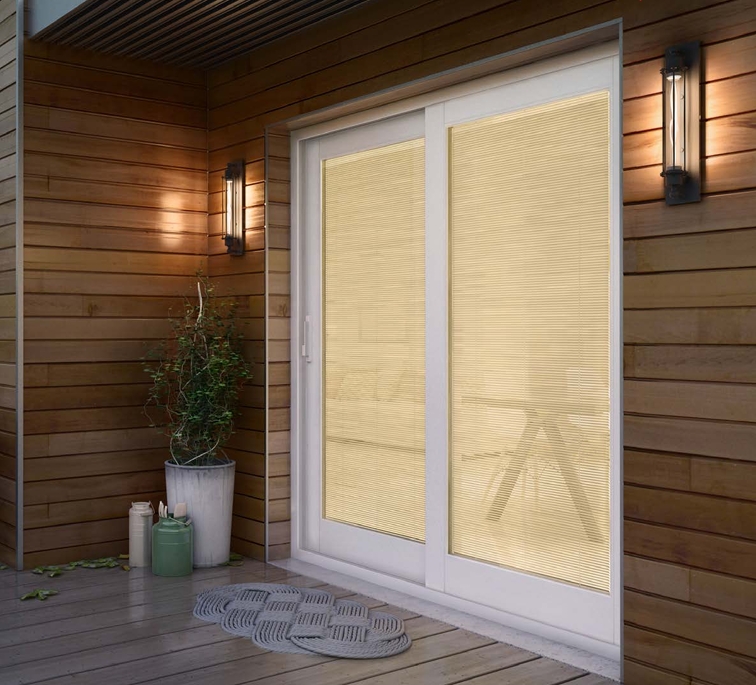
A patio door can completely transform a room by bringing in more daylight, but that doesn’t mean you have to give up privacy. If your door faces neighbouring homes, a shared pathway, or a busy street, the right glass choice can help create a brighter space without making you feel exposed.
Instead of treating privacy as an all-or-nothing decision, think about how much visibility you’re comfortable with during both the day and at night, when interior lights make it easier to see inside.
Popular privacy options include:
- Frosted glass for soft, diffused light with limited visibility.
- Textured glass that adds privacy while creating visual interest.
- Decorative glass that complements traditional or contemporary homes.
- Integrated blinds between the glass for adjustable privacy without extra window coverings.
The goal is to choose a solution that keeps your entrance feeling open and inviting while providing the level of privacy that suits your home.
11. Security Is About More Than the Lock
A patio door is often one of the largest openings in a home, so security deserves just as much attention as style or energy efficiency. While many homeowners focus on the lock itself, a secure patio door is actually the result of several components working together, from the frame and glass to the locking system and hardware.
When comparing doors, look for features that improve both security and everyday usability, such as:
- Multi-point locking systems that secure the door at multiple locations.
- Reinforced frames for added structural strength.
- Tempered or laminated glass, depending on your priorities.
- Quality handles and hardware that operate smoothly and lock securely.
Rather than relying on one standout feature, consider how the complete door system is designed to help protect your home.
12. Don’t Overlook the Track and Rollers
For sliding patio doors, one of the biggest indicators of long-term quality isn’t immediately obvious, it’s how the door moves.
The track and roller system determines whether the door glides effortlessly or becomes frustrating to use after years of regular operation. Quality rollers help distribute weight more evenly, reducing unnecessary friction and making the door easier to open and close.
A well-designed track should also:
- Resist debris buildup.
- Drain moisture effectively.
- Continue operating smoothly through changing weather conditions.
- Require minimal routine maintenance.
This is one of those features homeowners rarely notice when it’s working well – but quickly appreciate when it isn’t.
13. Installation Can Make or Break Performance
Even a high-performance patio door won’t deliver its full benefits if it’s installed incorrectly. Proper installation affects everything from energy efficiency and weather sealing to smooth operation and long-term durability.
A properly installed patio door should sit square within the opening, allowing consistent contact with the weatherstripping and ensuring the locking system works as intended.
During installation, it’s worth ensuring that:
- The frame is properly aligned.
- Gaps around the door are even.
- The threshold is sealed correctly.
- The surrounding opening is in good condition.
The product and the installation work together as one complete system, so both deserve equal attention.
14. Think About Long-Term Maintenance Before You Buy
Your patio door should continue looking and operating well for years, so maintenance is worth considering before making a final decision. Different materials require different levels of care, and choosing one that matches your expectations can make ownership much easier.
In general:
- Vinyl requires relatively little maintenance beyond routine cleaning.
- Fiberglass offers excellent durability with minimal ongoing upkeep.
- Wood provides timeless character but typically requires more regular care.
- Sliding door tracks benefit from occasional cleaning to maintain smooth operation.
A few minutes of seasonal maintenance can help preserve both the appearance and performance of your patio door over the long term.
15. Don’t Choose Based on Price Alone
Price is naturally one of the biggest factors when buying a patio door, but it rarely tells the whole story. Two doors with similar price tags can differ significantly in insulation, hardware quality, frame construction, warranty coverage, and expected lifespan.
Instead of focusing only on the initial purchase price, think about the value you’ll receive over years of everyday use.
A good comparison should consider:
- Energy performance
- Frame and hardware quality
- Warranty coverage
- Maintenance requirements
- Long-term durability
A slightly higher upfront investment may provide better comfort, reliability, and performance over the life of the door.
Common Patio Door Buying Mistakes to Avoid
Choosing a patio door involves balancing appearance, performance, and practicality. Avoiding a few common mistakes can make the decision much easier.
- Choosing style before function. A beautiful door should also suit the room’s layout and how you’ll use it every day.
- Assuming bigger glass is always better. Large glass panels create beautiful views, but energy performance and comfort still matter.
- Ignoring performance ratings. Compare U-factor, Energy Rating, and air leakage instead of relying only on marketing claims.
- Overlooking installation. Even an excellent product can underperform if it isn’t installed correctly.
- Forgetting about maintenance. Choose a material that matches your long-term expectations.
Taking a little extra time to evaluate these factors now can help prevent costly regrets later.
Final Thoughts: Choose a Patio Door That Fits the Way You Live
The best patio door isn’t simply the one with the largest glass panels or the most eye-catching design. It’s the one that complements your home, supports everyday comfort, and continues to perform well through Calgary’s changing seasons.
Start by thinking about how you use the space, then compare styles, materials, glazing options, energy performance, security features, and installation quality before making your final decision. Looking at the complete door system, not just one standout feature, will help you choose a patio door that delivers lasting value.
At NORC Windows & Doors, we believe choosing the right patio door should feel straightforward – not overwhelming. Explore our range of patio door solutions and discover a design that’s built to complement Calgary homes, Alberta’s climate, and the way you want your home to look, feel, and perform.