
Your entry door is one of the first things people notice about your home. It shapes the character of your exterior, creates the first impression for visitors, and plays an important role in everyday comfort, security, and energy efficiency.
But choosing a new entry door involves much more than picking a colour or style.
The material, construction, glass, insulation, weather sealing, hardware, size, configuration, and energy performance can all affect how the door looks and performs over time.
Whether you’re replacing an aging entry door, renovating your home’s exterior, or simply looking for a more attractive and efficient entrance, understanding what to look for can make the decision much easier.
This guide walks through the most important factors to consider before choosing a new entry door.
1. Start With What You Want the Door To Do
Before comparing materials and designs, think about what matters most to you.
Your front door may need to provide:
- Strong curb appeal
- Better energy efficiency
- Improved weather resistance
- Increased security
- More natural light
- Greater privacy
- Easier everyday operation
- A style that complements your home
Different homes and entrances have different priorities.
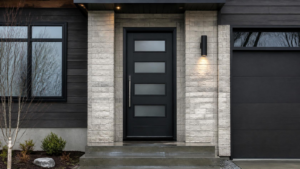
For example, a dark-coloured modern door with a large glass panel may create a dramatic contemporary appearance, while a traditional home may look better with a classic panelled door and smaller decorative glazing.
Start with the way you want the entrance to look, feel, and function, then choose the construction and specifications that support those goals.
2. Choose the Right Door Material
One of the biggest decisions you’ll make is the material of the door itself.
Common residential entry doors include steel, fiberglass, and wood, with each offering different characteristics.
Fiberglass Doors
Fiberglass doors are popular because they can combine durability, low maintenance, insulation, and design flexibility.
Quality fiberglass door systems can be manufactured with finishes and panel designs that replicate the appearance of traditional materials while offering modern performance.
They are particularly appealing for homeowners who want an attractive entrance without the maintenance associated with some natural materials.
Fiberglass may be a good choice if you prioritize:
- Durability
- Low maintenance
- Energy efficiency
- Design flexibility
- Resistance to everyday weather exposure
The specific performance still depends on the construction of the complete door system, so compare actual product specifications rather than assuming every fiberglass door performs the same way.
Steel Doors
Steel doors are known for strength and durability and can be an excellent choice when security and robust construction are priorities.
Modern insulated steel entry doors can also provide good thermal performance.
However, steel isn’t completely maintenance-free. Damage to the protective finish should be addressed appropriately to help prevent corrosion, particularly where the door is exposed to moisture or harsh conditions.
Steel may be a good choice if you prioritize:
- Strength
- Security
- Durability
- A clean, modern appearance
- Value
Wood Doors
Wood offers a distinctive natural appearance and can complement traditional, craftsman, and other architectural styles beautifully.
However, natural wood generally requires more maintenance than many modern alternatives because it can respond to moisture and changing environmental conditions.
Wood may be a good choice if you prioritize:
- Natural appearance
- Traditional character
- Custom design
- Architectural authenticity
The best material isn’t necessarily the same for every homeowner. Consider your home’s architecture, climate exposure, maintenance preferences, budget, and performance expectations.
3. Look at the Door’s Construction, Not Just the Surface
Two doors made from the same material can perform very differently.
The door slab is only one part of the overall system.
Pay attention to:
- Core construction
- Insulation
- Frame material
- Weatherstripping
- Threshold
- Door sweep
- Hinges
- Lock reinforcement
- Glass construction
- Overall assembly
A well-designed door system works as a complete unit.
This is particularly important for exterior doors because the entrance separates your heated living space from the outdoors. Calgary notes that windows and doors help shield homes from the elements, slow heat loss, reduce solar heat gain, and manage noise.
4. Consider Energy Efficiency
Your front door is part of your home’s building envelope, so thermal performance matters.
A poorly performing or poorly sealed door can contribute to drafts and heat loss, particularly around the edges and frame.
When comparing doors, look for actual performance information rather than relying solely on phrases such as “energy efficient.”
Natural Resources Canada uses several measurements when evaluating the energy performance of windows and doors, including U-factor, Solar Heat Gain Coefficient (SHGC), Energy Rating (ER), and air leakage.
U-Factor
U-factor measures the rate of heat transfer through the product.
Lower U-factor means less heat transfer and better insulating performance.
When comparing doors, make sure you’re looking at the performance of the appropriate door assembly rather than a glass-only or centre-of-glass value.
Energy Rating (ER)
Energy Rating combines factors including heat transfer, solar heat gain, and air leakage.
Higher ER indicates better overall energy performance.
ER is particularly useful because it considers more than one aspect of performance.
Air Leakage
Air leakage measures how much air passes through a closed product under specified test conditions.
Lower air leakage generally indicates a tighter product.
This matters because even a well-insulated door can become uncomfortable if significant air moves around the edges
5. Don’t Forget the Door Frame
It’s easy to focus on the slab because that’s what you see, but the frame is an important part of the door system.
A high-quality slab installed in a poorly performing frame won’t deliver the same overall result as a properly designed door system.
Consider:
- Frame material
- Thermal performance
- Weather resistance
- Structural strength
- Compatibility with the door slab
- Sealing around the frame
The threshold matters too.
It helps create a transition between the interior and exterior while contributing to weather resistance and air sealing.
When evaluating an entry door, think about the entire door assembly, not just the decorative face.
6. Decide How Much Glass You Want
Glass can completely change the appearance and character of an entry door.
You can choose from configurations ranging from solid doors with no glazing to doors with large glass areas.
Full Glass
Large glass panels can create a bright, contemporary entrance and bring significant natural light into the foyer.
They are particularly effective when the entrance is positioned where daylight is desirable.
Partial Glass
A smaller glass insert can provide natural light while maintaining more visual privacy and a more traditional appearance.
Decorative Glass
Decorative or textured glass can become an architectural feature while helping obscure the view into the home.
When selecting decorative glass, consider both appearance and privacy. A beautiful pattern may look very different during the day compared with nighttime when interior lights are on.

7. Think About Privacy
The amount and type of glass should reflect how exposed your entrance is.
If your front door faces a busy street or is close to a neighbouring property, completely transparent glass may not be ideal.
Options such as:
- Frosted glass
- Textured glass
- Obscure glass
- Decorative patterns
can allow daylight into the entrance while reducing visibility.
Think about privacy from both directions: what you can see outside and what others can see inside.
8. Match the Door to Your Home’s Architecture
An entry door is one of the largest visual elements on your home’s exterior, so choosing a style that complements your home’s architecture can make a significant difference to curb appeal.
Rather than following a trend, think about how the door works with the rest of your home’s design.
Consider:
- Panel design
- Contemporary versus traditional styling
- Frame colour
- Glass layout
- Sidelites
- Transoms
- Hardware finish
- Overall proportions
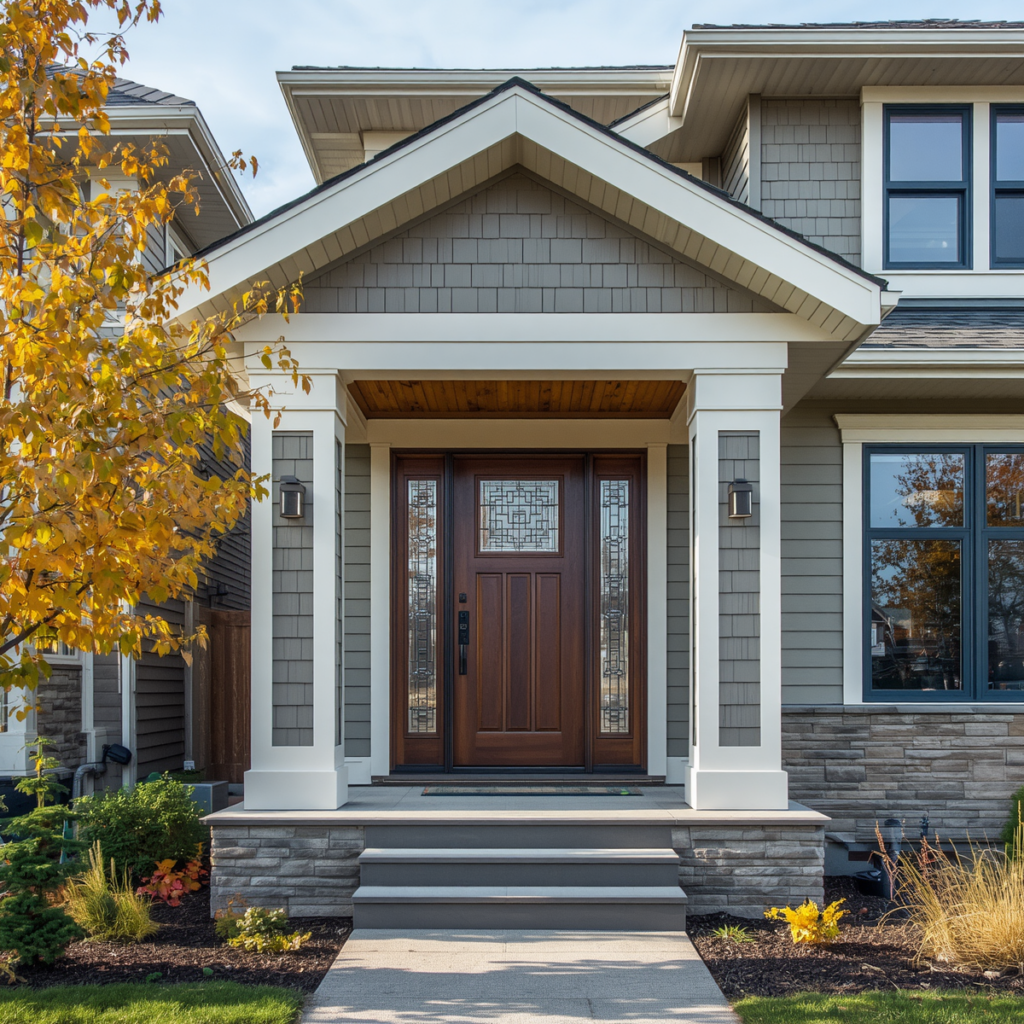
A modern home may suit clean lines, larger glass areas, and minimal detailing, while a traditional home may look more balanced with raised panels, decorative glazing, and classic hardware.
The goal isn’t necessarily to make the door stand out—it should feel like a natural part of the home’s overall appearance.
9. Consider Calgary’s Climate
A front door experiences changing weather every day, making local climate an important part of the decision.
In Calgary, doors may be exposed to:
- Cold winter temperatures
- Chinook-driven temperature swings
- Strong winds
- Snow
- Intense summer sunlight
These conditions make weather resistance and proper sealing especially important.
Look for features such as:
- Quality weatherstripping
- A well-designed threshold
- An insulated core
- Durable exterior finishes
- A properly sealed frame
The complete door system—including installation—plays an important role in helping reduce drafts and maintain indoor comfort.
10. Understand the Performance Ratings
Like windows, entry doors can be compared using standardized performance measurements.
Rather than relying only on marketing claims, look for measurable performance information when it’s available.
U-Factor
Lower U-factor generally indicates better insulating performance.
Energy Rating (ER)
Higher ER generally indicates better overall energy performance by considering multiple factors together.
Air Leakage
Lower air leakage generally means a tighter door assembly.
These values can provide a more meaningful comparison than phrases like “high-performance” or “premium.”
11. Choose the Right Hardware
Hardware affects both appearance and everyday use.
Think beyond the handle itself.
Consider:
- Lever versus knob
- Deadbolt compatibility
- Multi-point locking systems
- Hinges
- Finish
- Smart lock compatibility
Choose hardware that complements both the style of the door and how you use your entrance.
12. Think About Maintenance
Different door materials require different levels of maintenance.
Fiberglass generally requires relatively little maintenance beyond routine cleaning.
Steel should be inspected for damage to the protective finish.
Wood typically requires more regular care to help protect it from moisture and changing weather conditions.
Before choosing a material, think about how much ongoing maintenance you’re comfortable with over the long term.
13. Consider Sidelites and Transoms
Sometimes improving an entrance isn’t only about replacing the door itself.
Sidelites and transoms can dramatically change the appearance of an entryway while bringing additional natural light into the foyer.
Options include:
- Single sidelite
- Double sidelites
- Full-height sidelites
- Decorative glass sidelites
- Transom windows above the door
These configurations can create a brighter and more welcoming entrance while maintaining a cohesive appearance.
14. Think About Installation
Even a high-quality entry door won’t perform as intended if it’s installed incorrectly.
Proper installation helps ensure:
- A square fit
- Consistent gaps
- Effective weather sealing
- Smooth operation
- Long-term performance
When replacing an existing door, the condition of the opening and frame should also be evaluated before the new door is installed.
15. Ask About Warranty
Before making a final decision, understand exactly what the warranty covers.
Ask about:
- Door slab
- Glass
- Hardware
- Finish
- Weatherstripping
- Labour, if applicable
- Warranty duration
- Transferability
- Exclusions
Reading the warranty terms can help prevent misunderstandings later.
16. Don’t Choose Based on Price Alone
Price matters, but long-term value often matters more.
A lower-priced door may differ in:
- Insulation
- Hardware
- Frame construction
- Glass quality
- Warranty
- Expected durability
Instead of asking only, “How much does this door cost?”, consider what you’re getting for the price and how well it fits your priorities.
17. Think About the Whole Entrance
The front entrance works as a complete system.
The door, frame, sidelites, transom, hardware, trim, lighting, and surrounding exterior features all contribute to the overall experience.
A coordinated entrance can improve both everyday usability and curb appeal.
Common Entry Door Buying Mistakes to Avoid
Some of the most common mistakes include:
- Choosing based only on appearance.
- Ignoring the frame and threshold.
- Assuming all fiberglass or steel doors perform the same.
- Overlooking privacy when selecting glass.
- Focusing only on the purchase price.
- Forgetting to compare measurable performance values.
- Not considering Calgary’s climate and weather exposure.
- Skipping a review of the warranty details.
Avoiding these mistakes can make it easier to choose a door that continues to perform well for years.
Final Thoughts: Choose a Door That Fits the Way You Live
The best entry door isn’t necessarily the most expensive or the one with the most decorative features.
It’s the one that suits your home, your lifestyle, and your priorities.
Start by thinking about what you want your entrance to accomplish. Then compare materials, construction, energy performance, glass options, hardware, and maintenance requirements before making a final decision.
A well-chosen entry door should do more than create a beautiful first impression. It should help make your home more comfortable, secure, energy-efficient, and welcoming every time you come home.
At NORC Windows & Doors, we believe choosing the right entry door should feel straightforward, not overwhelming. Explore our range of entry door styles and discover a solution designed for Calgary homes and Alberta’s changing seasons.