
Few things make a home feel uncomfortable faster than a cold draft.
You may notice it while sitting beside a window, standing near an exterior door, or walking through a room that always seems colder than the rest of the house. Sometimes the source is obvious. Other times, the draft can be difficult to locate.
Drafty windows and doors aren’t just a comfort issue. Uncontrolled air leakage can also contribute to heat loss, making your heating system work harder to maintain a comfortable indoor temperature.
The good news is that not every draft means you need to replace your windows or doors immediately. Some problems can be addressed with weatherstripping, caulking or other repairs. In other cases, persistent drafts may indicate that the product itself is outdated or no longer performing well.
So how do you know what’s causing the problem?
Let’s take a closer look.
Why Do Windows and Doors Become Drafty?
Windows and doors are openings in your home’s building envelope. They need to provide access, natural light and ventilation while also helping separate your indoor environment from outdoor conditions.
Over time, several things can affect how well they perform.
Common causes of drafts include:
- Worn or damaged weatherstripping
- Deteriorated caulking
- Gaps around window or door frames
- Poorly sealed joints
- Aging window or door components
- Damaged seals
- Poorly fitting doors
- Structural movement around the opening
- Older products with limited insulation
- Air leakage around the installation area
Sometimes the problem is with the product itself. Other times, the problem is around the product.
Identifying the source is the first step toward finding the right solution.
1. Worn Weatherstripping
Weatherstripping creates a seal between moving parts of a window or door.
Over time, it can become compressed, brittle, cracked or damaged.
When that happens, small gaps can allow outdoor air to enter.
Exterior doors are particularly noticeable because they are opened and closed frequently. But operable windows can also develop problems with their seals.
What to check
Inspect the weatherstripping around your exterior doors and operable windows.
Look for:
- Cracks
- Gaps
- Flattened sections
- Missing pieces
- Loose material
- Areas where the seal no longer makes proper contact
If the weatherstripping is visibly damaged, replacing it may help restore the seal.
2. Deteriorated Caulking
Caulking helps seal stationary joints around windows and doors.
As caulking ages, it can shrink, crack, separate from the surface or deteriorate due to weather exposure.
Even a relatively small gap can allow air and moisture to move through areas that should remain sealed.
Look closely at the exterior perimeter of your windows and doors.
Pay particular attention to corners and transitions where different materials meet.
If you notice cracked or separated caulking, the seal may need to be repaired.
However, caulking should not be used to hide a larger structural or installation problem. If there are significant gaps, water intrusion or movement around the opening, a more thorough assessment may be necessary.
3. Gaps Around the Window or Door Frame
Sometimes the window or door itself isn’t the main problem.
The issue may be around the frame.
A window can have good glass and a well-designed frame, but if there are gaps around the opening, outdoor air can still enter the home.
This is why air sealing is an important part of overall energy efficiency.
Natural Resources Canada recommends addressing air leakage around windows and exterior doors through appropriate measures such as weatherstripping and caulking.
If you feel a draft coming from the perimeter rather than through the window or door itself, the surrounding seal should be investigated.
4. Older Windows May Simply Perform Poorly
Not every draft is caused by a visible gap.
Older windows may have poorer thermal and air-leakage performance than modern energy-efficient products.
Technology has changed significantly over the years.
Today’s windows can incorporate features such as:
- Multiple panes
- Low-E glass
- Insulating gas fills
- Improved spacer systems
- Better seals
- Insulated frames
- More advanced window designs
These features can reduce heat transfer and improve overall comfort.
If your windows are several decades old and consistently feel cold, replacement may be worth considering even if you cannot identify one obvious leak.
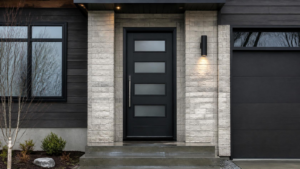
5. Your Door May Not Be Sealing Properly
Exterior doors experience a lot of movement.
They open and close hundreds or thousands of times over their service life, and the components responsible for creating a tight seal can eventually wear.
A door may become drafty if:
- The weatherstripping has deteriorated
- The door has shifted
- The threshold isn’t sealing properly
- The frame has gaps
- The door doesn’t close tightly
- The door or frame has been damaged
You can often identify a door draft by standing near the perimeter on a cold or windy day.
If you can feel cold air moving around the edges of a closed door, inspect the seals and frame carefully.
6. Cold Glass Doesn’t Always Mean There’s a Draft
This is an important distinction.
A window can feel cold without actually leaking air.
Glass naturally becomes colder when outdoor temperatures drop. If the window has poor thermal performance, the interior surface can feel significantly colder than the surrounding wall.
This is heat transfer, not necessarily air leakage.
The two problems can sometimes occur together, but they aren’t the same thing.
Air leakage
Air physically moves through gaps or openings.
Heat transfer
Heat moves through the window or door materials from the warmer side toward the colder side.
Energy-efficient products are designed to address both.
That’s why looking only for visible gaps isn’t enough when evaluating older windows.
7. Condensation Can Be a Warning Sign
Condensation on the interior side of your windows can have several causes.
Indoor humidity, ventilation, outdoor temperature and window surface temperature can all play a role.
If condensation occurs frequently, particularly during cold weather, it may be worth looking at the overall indoor humidity level as well as the window’s performance.
Persistent moisture around windows should not simply be ignored.
Excess moisture can contribute to problems such as:
- Damaged finishes
- Deteriorated frames
- Mold growth
- Moisture damage
However, condensation alone does not automatically mean that your windows need replacement.
The cause needs to be identified first.
8. How Can You Find Where the Draft Is Coming From?
You don’t necessarily need specialized equipment to start investigating.
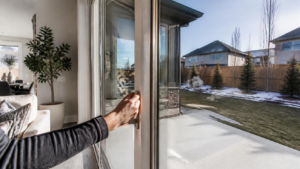
On a cold or windy day, slowly check around your windows and exterior doors.
Look for visible gaps
Check the frame, corners, seals and surrounding trim.
Feel the air movement
Run your hand slowly around the perimeter of the window or door.
Look at the curtains and blinds
Movement when everything is closed can sometimes indicate air movement.
Pay attention to temperature differences
If one area near a window consistently feels much colder than the surrounding room, investigate further.
Check the door threshold
Exterior doors can develop noticeable drafts underneath or around the bottom edge.
For a more detailed assessment, professional energy evaluations can identify air leakage and other weaknesses that aren’t always obvious during a simple visual inspection.
9. What Can You Do About Drafty Windows and Doors?
The right solution depends on what’s causing the problem.
If the weatherstripping is worn
Replacing the weatherstripping may restore the seal.
If the caulking is cracked
Appropriate exterior caulking may help seal stationary gaps.
If there are minor air leaks
Air-sealing improvements may reduce unwanted air movement.
If the door isn’t closing properly
The door, hinges, frame or hardware may need adjustment.
If the window or door is significantly deteriorated
Replacement may provide a more comprehensive improvement.
The key is to fix the actual source rather than treating every draft as a reason to replace the entire product.
10. When Should You Consider Replacing Drafty Windows?
Repair isn’t always the best long-term solution.
If your windows are old, deteriorated or consistently uncomfortable despite repairs, replacement may make more sense.
Consider replacement if you notice several of these signs:
- Persistent drafts
- Difficult operation
- Damaged frames
- Failed seals
- Significant condensation
- Poor insulation performance
- Noticeable cold spots
- Increasing maintenance requirements
- Visible deterioration
- Significant difficulty keeping rooms comfortable
Replacing windows can also be an opportunity to improve more than just air leakage.
Modern energy-efficient windows can provide improvements in thermal performance, solar control, comfort and overall usability.
11. When Should You Consider Replacing an Exterior Door?
The same principle applies to exterior doors.
If a door is structurally sound and the problem is simply worn weatherstripping, a repair may be sufficient.
But replacement may be worth considering when the door has multiple issues.
Look for:
- Persistent drafts
- Damaged or deteriorated components
- Poor sealing
- Difficulty opening or closing
- Warping
- Cracked or damaged areas
- Poor thermal performance
- Excessive maintenance
A modern exterior door can improve the entrance’s appearance while also providing better insulation and sealing.
Why Energy-Efficient Windows and Doors Matter
Windows and exterior doors are part of the home’s overall building envelope.
Natural Resources Canada notes that windows, doors and skylights can account for up to 25% of a home’s energy loss.
That means improving the performance of these openings can be an important part of a broader energy-efficiency strategy.
However, windows and doors are only one part of the picture.
Insulation, air sealing, heating systems, ventilation and other building components all work together.
A whole-home approach is often the best way to understand where energy is being lost and which improvements should be prioritized.
How to Reduce Drafts Without Replacing Everything
If you’re not ready for a major renovation, start with the simplest improvements.
1. Inspect weatherstripping
Look for obvious damage around exterior doors and operable windows.
2. Check caulking
Look for cracks and separation around stationary joints.
3. Identify problem areas
Pay attention to rooms that consistently feel colder.
4. Manage indoor humidity
Excessive indoor humidity can contribute to window condensation during cold weather.
5. Check your doors
Make sure exterior doors close tightly and the seals make proper contact.
6. Look at the bigger picture
If drafts remain despite basic repairs, the underlying product or surrounding assembly may need further evaluation.
These steps can help you determine whether you’re dealing with a simple maintenance issue or a larger performance problem.
Drafty Windows and Doors: Repair or Replace?
There isn’t a universal answer.
A relatively new window with damaged weatherstripping may only need a simple repair.
An older window with poor thermal performance, failed seals and persistent drafts may be a better candidate for replacement.
The same applies to doors.
The most important question isn’t simply:
“Is my window or door drafty?”
It’s:
“Why is it drafty?”
Once the cause is understood, you can make a much more informed decision.
A More Comfortable Home Starts With Better Sealing
Drafts are more than an annoyance.
They can make rooms uncomfortable, contribute to heat loss and make it harder to maintain consistent indoor temperatures.
Sometimes the solution is simple: new weatherstripping, fresh caulking or a small repair.
Other times, persistent problems may indicate that an older window or door is no longer providing the level of performance your home needs.
If replacement is necessary, today’s energy-efficient windows and doors offer homeowners more options for improving comfort, insulation and overall performance.
Thinking About Replacing Drafty Windows or doors?
At NORC Windows & Doors, we believe homeowners should have the information they need to make confident decisions about their homes.
Whether you’re dealing with persistent drafts, aging windows, an inefficient exterior door or simply looking to improve your home’s comfort, choosing the right product is an important part of the process.
Explore NORC’s range of windows and doors and discover options designed with comfort, performance and lasting value in mind.