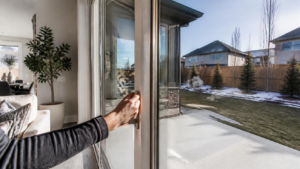

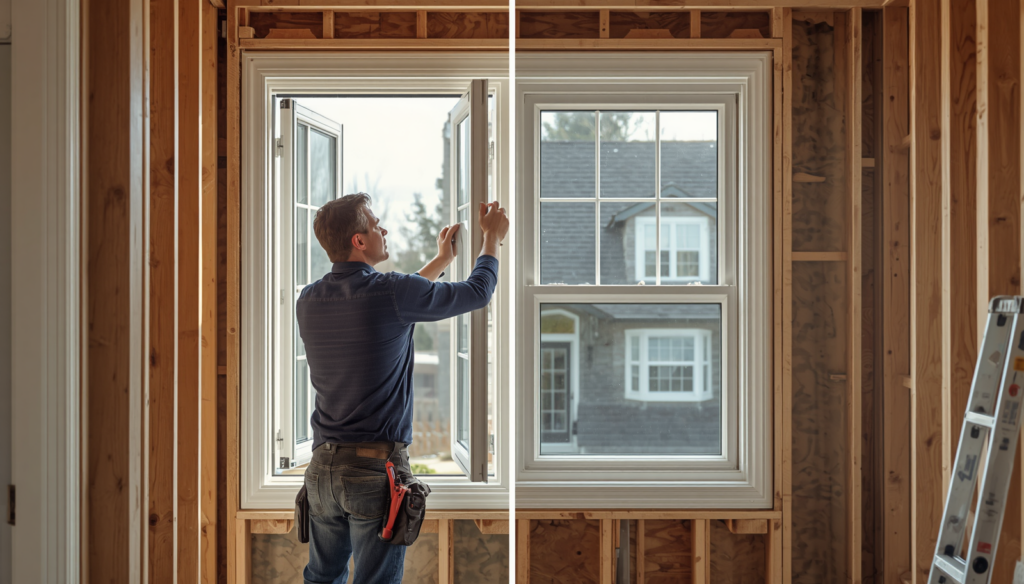
You chose your windows carefully. You compared styles, materials, glass options, colours, features, and prices. You made the investment because you wanted better comfort, appearance, efficiency, or functionality from your home.
Then the installation was completed.
Everything looks new. The frames are clean, the glass is clear, and the windows appear to be exactly what you ordered.
But something doesn’t feel right.
Maybe you still notice a draft. Perhaps one window is difficult to open. You hear more outside noise than expected, notice moisture around the frame, or see small gaps where the window meets the surrounding wall.
Does that mean the window itself is defective?
Not necessarily.
While windows can develop problems for many reasons, installation is an important part of how a replacement window performs. Even a well-made window needs to be properly measured, positioned, secured, sealed, insulated, and finished within the existing opening.
That is why certain symptoms are worth paying attention to.
Here are seven signs that your windows may have been installed incorrectly, and what homeowners should know before assuming something is wrong.
1. You Can Feel a Persistent Draft Around the Window
One of the first things homeowners may notice after a window replacement is unwanted air movement.
If you can consistently feel cold air around the perimeter of a relatively new window, it’s worth investigating.
A draft doesn’t automatically mean the window was installed incorrectly. Air leakage can have several causes, including the window itself, surrounding construction, existing building conditions, or gaps elsewhere in the wall assembly.
However, if the air movement appears to be coming specifically from around the window frame, the installation deserves attention.
The connection between the window and the surrounding opening needs to be appropriately sealed. The goal is to limit unwanted air movement and create a proper transition between the window and the building envelope.
This is particularly noticeable during colder weather when temperature differences make air movement easier to detect.
You may notice:
- A cold area around the window frame
- Air movement near the perimeter
- A room that feels noticeably colder near the window
- Curtains moving slightly when the rest of the room is still
- A noticeable difference between the new window and other areas of the room
If a new window feels noticeably drafty, don’t immediately assume the entire product is defective.
Instead, determine where the air is coming from and have the installation assessed if necessary.
2. The Window Is Difficult to Open, Close, or Lock
A replacement window should be functional as well as attractive.
Depending on the window style, you should generally be able to operate it smoothly and use its locking mechanism as intended.
If a newly installed window is unusually difficult to open or close, that is something worth addressing.
Installation can influence operation because the window needs to be properly positioned and secured within the opening. If the unit isn’t appropriately aligned, the moving components may not operate as smoothly as expected.
You might notice:
- A sash rubbing against the frame
- A window that requires excessive force to close
- Difficulty engaging the lock
- A crank or operating mechanism that feels unusually strained
- Uneven movement
- A window that appears slightly out of alignment
Again, these symptoms don’t automatically prove an installation problem.
Hardware can have issues. Components can require adjustment. Existing openings can also create challenges.
But if the problem appears immediately after installation, it makes sense to have it checked rather than simply accepting it as normal.
A new window shouldn’t leave you wondering whether you’re operating it correctly every time you use it.
3. You Notice Gaps or Uneven Spaces Around the Frame
Take a close look at the area where the new window meets the surrounding wall.
Does everything appear even and properly finished?
Small variations may occur depending on the home’s construction and the finishing materials used. However, obvious gaps, uneven spaces, or areas that look incomplete deserve attention.
The window should be appropriately integrated into the existing opening.
If you can see an unusual gap between the frame and surrounding materials, or if the finishing appears inconsistent from one side to another, it may indicate that the installation or finishing needs further attention.
Look for things such as:
- Visible gaps around the frame
- Uneven spacing
- Areas where the surrounding finish appears incomplete
- Noticeable differences in alignment
- Trim or finishing that doesn’t sit properly
- A window that appears noticeably crooked
Some of these issues may be cosmetic rather than performance-related, but appearance can still be an important part of a quality installation.
The goal is for the finished window to look like it belongs in the home, not like it was simply placed into an opening.
4. Moisture Appears Around the Window
Moisture is one of the signs homeowners should take seriously.
If you notice water around a replacement window, don’t automatically assume the window itself is leaking.
Water can enter a building through a number of pathways, and identifying the source is important.
The installation around a window needs to account for moisture management. Depending on the construction and installation method, details such as flashing, drainage, and appropriate sealing can contribute to managing water around the opening.
Warning signs may include:
- Water appearing around the interior frame
- Damp areas near the window
- Staining or discoloration
- Moisture around the surrounding wall
- Water appearing after rain or melting snow
- Repeated moisture in the same location
Condensation is a separate issue and can have different causes. Indoor humidity, temperature differences, ventilation, and the characteristics of the glass can all influence condensation.
That’s why moisture should be properly assessed rather than automatically blamed on installation.
If actual water intrusion is occurring, however, it’s not something to ignore.
Early investigation can help identify the source before a small issue becomes a larger one.
5. The Window Looks or Feels Out of Level
Windows are designed to operate within specific dimensions and tolerances.
If a window is noticeably out of alignment, you may be able to see it, and sometimes you can feel the consequences when operating it.
Stand back and look at the window from several angles.
Does the frame appear visually straight?
Does the sash sit evenly?
Does the window operate consistently from top to bottom?
In some cases, an alignment issue may be subtle. In others, it may become obvious through difficult operation, uneven gaps, or a sash that doesn’t appear to sit correctly within the frame.
The existing structure of a home can present challenges, so not every irregularity means an installer made a mistake.
Older homes in particular can have openings that aren’t perfectly uniform.
The important thing is that the installation should account for the actual conditions of the opening rather than simply forcing the window into position.
If something looks noticeably uneven or the window doesn’t operate as expected, it is worth having a professional take a closer look.
6. Your New Windows Aren’t Delivering the Comfort You Expected
You probably didn’t replace your windows simply because you wanted new glass.
You likely had a reason.
Perhaps certain rooms were uncomfortable. Maybe the old windows were drafty, difficult to operate, or showing signs of deterioration. You may have wanted better energy performance, improved appearance, or a more comfortable living environment.
So what happens when the new windows are installed and the room still feels exactly the same?
It’s worth investigating.
A window’s performance depends on several factors. The product itself matters, but so do the surrounding wall assembly, existing home construction, installation quality, indoor conditions, and other parts of the building envelope.
For example, if a homeowner expects a replacement window to eliminate every source of cold air in a room, the result may not always match that expectation because heat loss and comfort are influenced by more than one component.
However, persistent problems specifically associated with the window opening shouldn’t simply be dismissed.
Pay attention to patterns.
Does one newly installed window feel significantly different from another?
Is one room noticeably colder around a particular opening?
Do you feel air movement even when the window is fully closed?
Does the problem seem to come directly from the installation area?
These observations can provide useful information when determining what needs to be investigated.
7. Problems Keep Coming Back After Adjustments
Sometimes a window doesn’t operate perfectly immediately after installation and needs a simple adjustment.
That isn’t necessarily a major concern.
Like any installation project, a final inspection may reveal something that needs to be fine-tuned. Hardware can be adjusted, operating components can be checked, and finishing details can be corrected.
The bigger concern is when the same problem keeps returning.
For example, imagine a window repeatedly becomes difficult to operate even after adjustments. Or perhaps a draft continues to appear around the same area despite attempts to address it.
Recurring problems deserve a closer look.
Instead of repeatedly treating the symptom, it may be worth determining whether there is an underlying issue with the window, installation, surrounding opening, or another part of the building envelope.
The important thing is not to jump to conclusions.
A recurring issue doesn’t automatically mean the installation was incorrect.
It means the problem hasn’t been fully resolved, and that deserves proper attention.
What Should You Do If You Notice These Signs?
The first step is simple:
Don’t panic, and don’t immediately assume you need new windows again.
Many problems that homeowners notice after installation can have more than one possible cause.
Start by documenting what you’re seeing.
Take photographs if there is visible moisture, unusual gaps, or finishing concerns. Pay attention to when the problem occurs. Does it happen during windy weather? After rain? Only when temperatures drop? Is the window difficult to operate all the time or only occasionally?
These details can help a professional understand what is happening.
You should also check whether the issue affects one window or several.
If every replacement window behaves similarly, there may be a broader factor worth investigating. If only one window has a problem, the circumstances around that particular opening may be more relevant.
Don’t Confuse Condensation With a Window Installation Problem
This distinction is particularly important for Canadian homeowners.
Condensation on the interior surface of glass can occur when warm, humid indoor air meets a colder glass surface. Indoor humidity, outdoor temperature, ventilation, window characteristics, and other conditions can all influence condensation.
Therefore, seeing condensation doesn’t automatically mean the window was installed incorrectly.
However, moisture appearing between panes of insulating glass is a different matter and may indicate a problem with the sealed glass unit.
Similarly, water intrusion around the window should not simply be dismissed as ordinary condensation.
Understanding the difference between these situations can prevent unnecessary repairs or replacements.
What a Professional installation Should Accomplish
A good window installation isn’t simply about getting the old window out and the new one into place.
The process should account for the actual conditions of the home and the existing opening.
Depending on the project, that can involve:
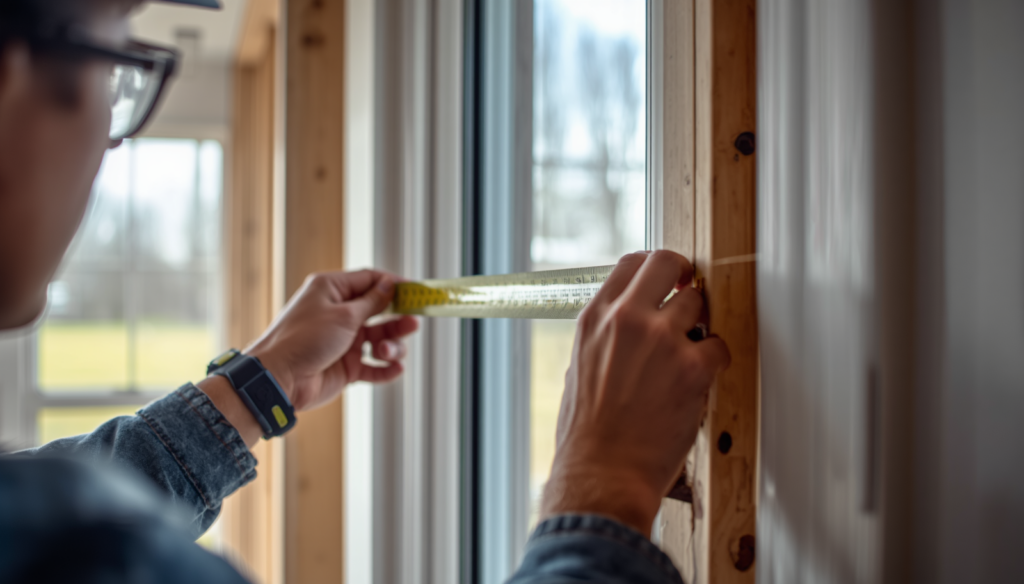
- Confirming measurements
- Preparing the opening
- Positioning the window appropriately
- Securing the unit
- Addressing the perimeter of the opening
- Providing appropriate sealing and insulation
- Managing moisture around the installation
- Checking operation
- Completing the interior and exterior finishing
The exact installation approach can vary depending on the window, construction, and project conditions.
That’s why installation shouldn’t be treated as a one-size-fits-all process.
Why the Installer Matters
When homeowners compare replacement windows, they often spend considerable time researching the product.
That’s understandable.
But it is equally worthwhile to understand who will be responsible for installing it.
Ask about the company’s installation process.
Find out how measurements are handled. Ask what happens when an existing opening presents unexpected conditions. Understand what is included in the installation and what happens if an adjustment is required afterward.
A quality product deserves a thoughtful installation.
And homeowners deserve to know what they’re paying for.
A New Window Should Feel Like an Upgrade
Replacing windows is a significant home improvement decision.
Once the project is finished, you shouldn’t spend your time wondering why a new window is difficult to operate, why there’s a draft around the frame, or why something doesn’t look quite right.
At the same time, homeowners shouldn’t assume that every unusual symptom means the installation was done incorrectly.
The better approach is to pay attention to the signs, understand that multiple factors can contribute to a problem, and have anything concerning properly assessed.
Because the goal isn’t simply to install a new window.
The goal is to create a finished result that looks right, operates properly, and contributes to a more comfortable home.
The Bottom Line
A window is only one part of a replacement project.
The installation connects that window to your home, which is why details such as measurement, positioning, sealing, insulation, moisture management, alignment, and finishing matter.
If you notice persistent drafts, difficult operation, visible gaps, moisture, alignment concerns, unexpected comfort problems, or recurring issues after installation, don’t simply ignore them.
They may have several possible explanations, but they’re worth investigating.
And when you’re planning a new window replacement, remember to evaluate more than the product sitting in the showroom.
Ask how it will become part of your home.
At NORC Windows & Doors, we understand that replacing a window is about more than selecting a new product. Proper installation is an important part of achieving the comfort, appearance, and functionality homeowners expect from their investment.
If you’re considering new windows or want to learn more about professional installation, contact NORC Windows & Doors to discuss your project.