
When a window, entry door, or patio door starts giving you trouble, the first question is often simple: Should you repair it or replace it?
The answer isn’t always obvious.
A sticking window may only need a hardware adjustment. A damaged screen can often be replaced without touching the rest of the unit. On the other hand, persistent drafts, deteriorating frames, failed glass seals, or repeated repairs may be signs that continuing to fix the same product is no longer the best long-term solution.
Knowing the difference can help you avoid spending money on repairs that only provide a temporary fix or replacing something that could have continued performing well with a relatively simple repair.
The right decision depends on several factors, including the condition of the product, the type of problem, its age, energy performance, appearance, functionality, and the expected cost of keeping it versus replacing it.
Here’s how to evaluate the situation.
Repair or Replace? Start With the Problem
Before deciding what to do, identify exactly what is wrong.
Not every problem means the entire window or door has reached the end of its useful life.
For example, a window that is difficult to operate could have a hardware issue. A door that feels drafty could have worn weatherstripping or an issue with how it closes. A damaged screen may have nothing to do with the condition of the main unit.
Start by asking:
- Is the problem cosmetic or functional?
- Is it isolated to one component?
- Has the problem happened before?
- Is the product otherwise performing well?
- Does the issue affect comfort, energy efficiency, security, or everyday use?
- Would repairing one component realistically solve the problem?
These questions help separate a repairable issue from a larger performance problem.
When Repairing Makes Sense
Repair can be the right choice when the main structure of the window or door is still in good condition and the problem is limited to a replaceable or serviceable component.
1. Minor Hardware Problems
Handles, locks, rollers, hinges, and other hardware can experience wear over time.
If the frame, glass, and overall unit remain in good condition, replacing or servicing the hardware may restore proper operation without requiring a complete replacement.
A window that doesn’t open smoothly, for example, doesn’t automatically need to be replaced. The hardware or operating mechanism may simply need attention.
2. Damaged Screens
Screens are particularly straightforward.
A torn or damaged screen doesn’t necessarily indicate a problem with the window or patio door itself. Depending on the product, the screen may be repaired or replaced independently.
If everything else is functioning properly, replacing the screen can be a much more practical solution than replacing the entire unit.
3. Worn Weatherstripping
Weatherstripping helps create a seal when a window or door is closed. Over time, it can become worn, compressed, or damaged.
If the frame and operating components are otherwise in good condition, addressing the weatherstripping may improve the seal and reduce unwanted air movement.
However, if drafts continue after the obvious sealing components have been addressed, it’s worth looking at the condition and performance of the entire unit.
4. Small Operational Issues
A window or door that has become slightly harder to operate may not be ready for replacement.
Sometimes cleaning, adjustment, lubrication where appropriate, or replacement of a worn component can make a noticeable difference.
The important question is whether the problem is isolated and fixable or whether it is a symptom of broader deterioration.
When Replacement Is Usually the Better Choice
There are situations where repeatedly repairing an aging product can become less practical.
If several problems are happening at the same time or if the same problem keeps returning, replacement may deserve serious consideration.
1. Persistent Draft
Drafts are one of the most noticeable signs that a window or door may no longer be performing as well as it should.
A draft can sometimes be related to weatherstripping, hardware, adjustment, or installation-related issues. But if the product has persistent air leakage despite reasonable repairs, the unit itself may be approaching the point where replacement makes more sense.
A more efficient replacement can also provide an opportunity to improve comfort and overall performance.
2. Condensation Between the Glass Panes
Condensation on the room-side surface of glass can have several causes and doesn’t automatically mean the window has failed.
But moisture trapped between insulated glass panes is different. It can indicate that the insulating glass seal has failed.
When the sealed glass unit is no longer performing as intended, the appropriate solution depends on the product and the extent of the issue. In some cases, the glass unit itself can be replaced without replacing the entire window. In others, especially with older products or multiple problems, full replacement may make more sense.
3. Deteriorating Frames or Materials
Look closely at the frame.
Cracking, warping, deterioration, or other significant material problems deserve attention. A damaged component may be repairable, but extensive deterioration can make a repair less worthwhile.
If the underlying structure is compromised, putting money into individual components may only postpone the larger problem.
4. Repeated Repairs
One repair doesn’t necessarily mean replacement is necessary.
But multiple repairs over several years tell a different story.
If you’re repeatedly spending money to correct different issues with the same window or door, consider the total cost rather than looking at each repair individually.
Ask yourself:
How much have I already spent, and how much more am I likely to spend?
If repairs are becoming frequent and the product is still showing signs of declining performance, replacement may provide better long-term value.
5. Difficult or Unreliable Operation
Windows and doors should work reliably as part of everyday life.
If you have to force a window open, struggle with a patio door every time you use it, or deal with a door that repeatedly fails to close or latch properly, the issue deserves more than a temporary workaround.
A component repair may solve the problem if the underlying unit is sound. But when poor operation is combined with age, deterioration, drafts, or other issues, replacement may be the more practical option.
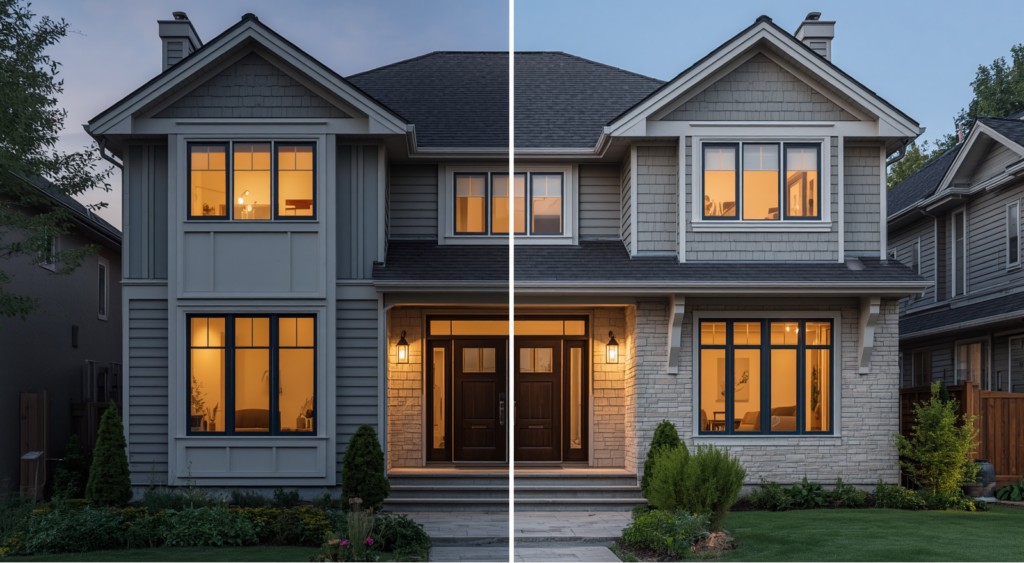
Should You Repair or Replace Your Windows?
Windows often remain in place for many years, so homeowners naturally want to know whether an existing unit can be salvaged.
Repair may make sense when:
- The frame remains in good condition.
- The glass is performing properly.
- The problem is limited to hardware.
- Weatherstripping is worn but replaceable.
- A screen is damaged.
- The window still provides acceptable comfort and performance.
- The problem is isolated rather than recurring.
Replacement may make more sense when:
- Several windows are experiencing similar problems.
- Drafts remain persistent.
- The frames or components are deteriorating.
- Insulated glass has failed.
- Windows are difficult to operate repeatedly.
- Energy performance and indoor comfort are noticeably poor.
- Repair costs continue to accumulate.
It’s also worth remembering that age alone shouldn’t make the decision for you.
An older window in excellent condition may continue to perform adequately, while a newer window with a significant problem may need attention sooner than expected.
The condition and performance of the actual product matter more than simply looking at the number of years it has been installed.
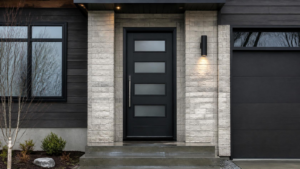
Should You Repair or Replace Your Entry Door?
Entry doors have an especially important job. They contribute to security, weather protection, appearance, and the overall first impression of your home.
Some entry-door problems are relatively simple to address.
A worn handle, lock, hinge, or weather seal may be repairable if the door itself remains structurally sound and operates properly.
Replacement becomes more compelling when the door has significant deterioration, persistent drafts, ongoing operating problems, or other issues that affect its performance.
There’s also an aesthetic consideration.
If the door functions adequately but looks significantly dated or no longer complements the exterior of the home, replacement can become part of a broader exterior update.
However, appearance alone doesn’t mean the existing door must be replaced. It’s about deciding whether the improvement you want justifies the investment.
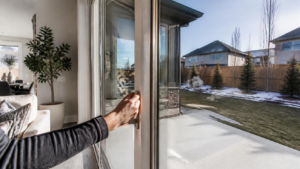
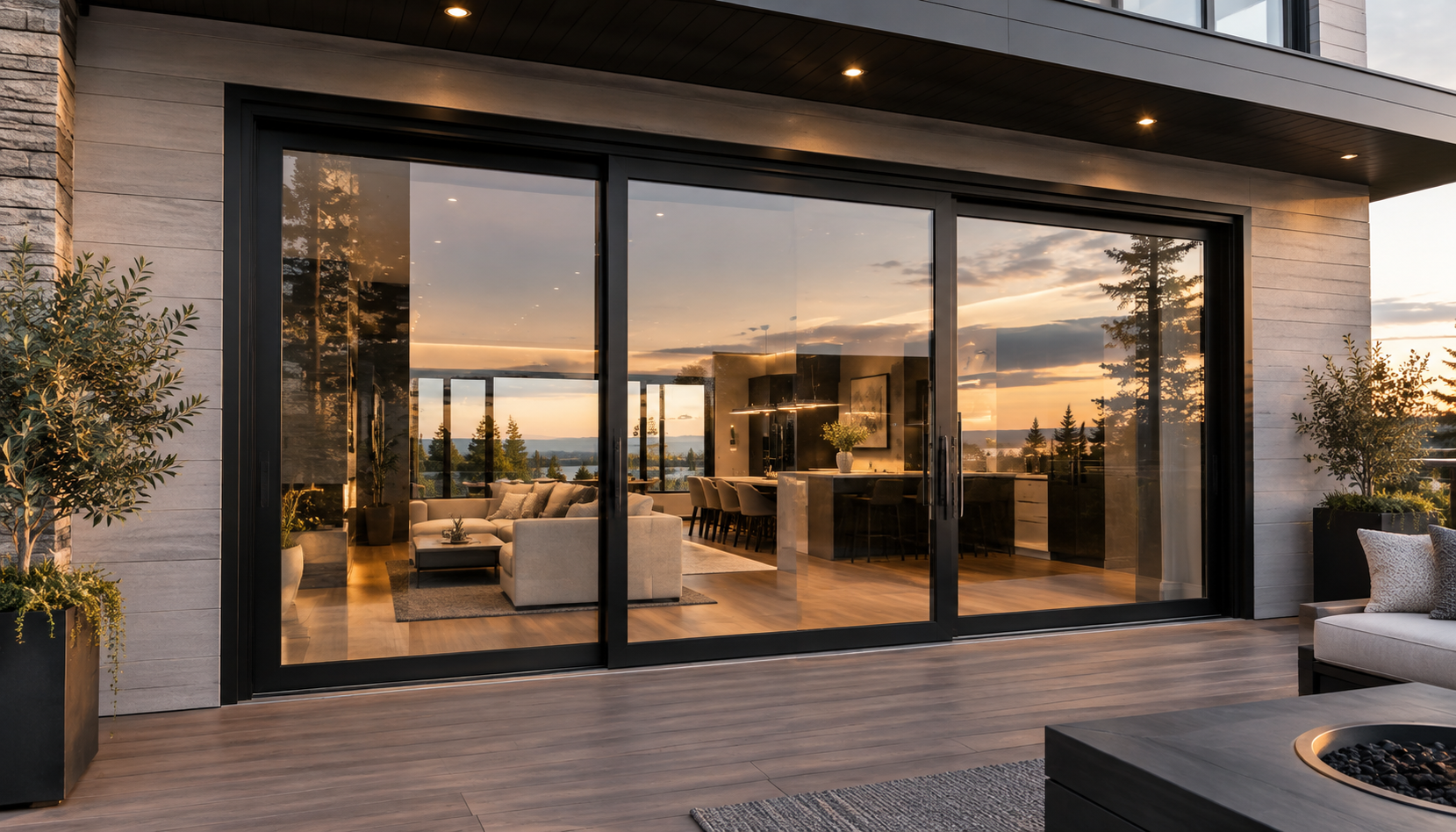
Should You Repair or Replace Your Patio Door?
Patio doors receive a lot of use.
They are opened and closed frequently, exposed to changing temperatures, and expected to provide a smooth connection between indoor and outdoor spaces.
A patio door that becomes difficult to slide may have an issue with its rollers or hardware. A worn screen may simply need replacement. Problems with weatherstripping may also be addressed independently.
But if the door continues to operate poorly after reasonable repairs—or if multiple components are aging at the same time—replacement may be worth considering.
Look at the complete picture:
- Does the door slide or operate smoothly?
- Does it close securely?
- Does it provide a good seal?
- Is the glass in good condition?
- Is the frame still sound?
- Are repairs becoming more frequent?
- Does the door still meet your needs?
If the answer to several of these questions is no, replacement may provide a more complete solution.
Don’t Make Decision Based on Price Alone
One of the biggest mistakes homeowners can make is comparing only the immediate repair cost with the purchase price of a replacement.
A repair may cost less today but what happens if another component fails six months later?
Likewise, replacing a perfectly serviceable window simply because a small component needs attention may not be the best use of your money.
Instead, consider short-term cost and long-term value together.
Think about:
The repair cost:
How much will it cost to fix the current problem?
The likely lifespan:
How much useful life does the existing product realistically have left?
Future repairs:
Is this an isolated problem, or are other issues likely to follow?
Performance:
Will the existing product continue to provide the comfort, operation, and performance you expect?
Replacement benefits:
Would a new product provide meaningful improvements in function, comfort, appearance, or energy performance?
Your plans for the home:
If you’re planning a renovation or exterior update anyway, replacement may make more sense as part of that project.
Looking at the entire picture often leads to a better decision than focusing on one number.
Five Questions to Ask Before Replacing Anything
Before committing to a replacement, ask these five questions.
1. What Exactly Has Failed?
Don’t assume the entire unit is defective because one component isn’t working.
Find out whether the issue is with the glass, hardware, weatherstripping, frame, operating mechanism, or another component.
2. Can the Problem Be Repaired Properly?
Some problems can be corrected effectively. Others may only receive a temporary fix.
The goal isn’t simply to make the product work today. It’s to understand whether the repair is likely to provide a worthwhile solution.
3. Are There Other Problems?
Look beyond the original complaint.
If a window has a damaged handle but also has deteriorating components and persistent drafts, repairing the handle alone may not solve the bigger problem.
4. How Often Have You Repaired It?
A repair history can tell you a lot.
One repair over many years is very different from repeated service calls for different issues.
5. Does the Product Still Meet Your Needs?
Your home may have changed since the original window or door was installed.
Maybe the room is now used differently. Maybe you want more natural light, easier operation, improved comfort, or a different style.
Sometimes replacement isn’t about fixing something that’s completely broken. It’s about upgrading a product that no longer fits the way you use your home.
Sometimes the Best Answer Is a Professional Assessment
If you’re still unsure, you don’t necessarily have to make the decision alone.
A professional assessment can help determine whether you’re dealing with a relatively simple component problem or a larger issue involving the product itself.
This is particularly useful when the problem isn’t obvious.
A window may feel drafty, for example, but the cause could involve the weather seal, operating components, glass, frame, or installation. Similarly, a patio door that is difficult to operate may have a hardware issue rather than requiring complete replacement.
Getting the problem properly identified first can help you avoid spending money in the wrong place.
The Bottom Line: Repair What Makes Sense, Replace When It Adds Value
The repair-versus-replace decision isn’t about automatically choosing the cheaper option.
It’s about choosing the option that makes the most sense for the condition of the product, your home’s needs, and your long-term plans.
If a screen is damaged, a handle has failed, or a small component needs attention, repair may be all you need.
But when problems become persistent, repairs become frequent, performance declines, or the product is no longer meeting your expectations, replacement may offer a more complete and lasting solution.
The most important thing is to look beyond the immediate problem.
Consider the condition of the entire unit. Think about how often you’ve had to repair it. Consider comfort, operation, appearance, and long-term value. Then make the decision based on the whole picture, not just today’s repair bill.
Ready to Find the Right Solution?
Whether your home needs a simple repair or you’re considering a complete upgrade, understanding your options is the first step.
At NORC Windows & Doors, we can help you evaluate your needs and explore solutions that make sense for your home.
Sometimes the right answer is repair. Sometimes it’s replacement. The goal is knowing which one is right for you.
Explore NORC Windows & Doors and take the next step toward a more comfortable, functional, and beautiful home.