
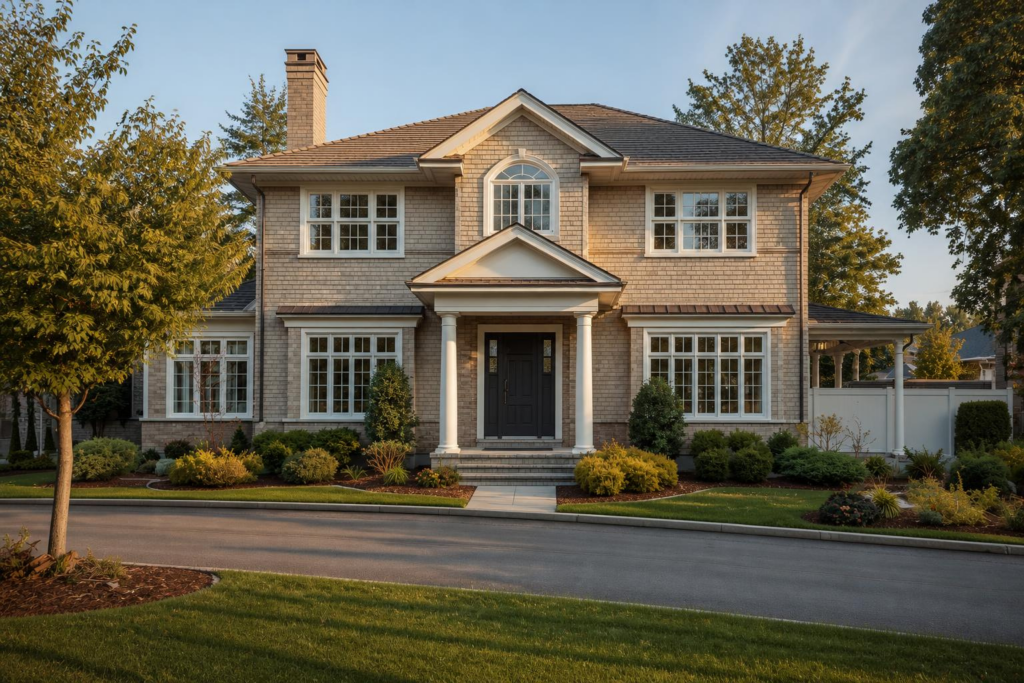
Your home doesn’t have to be falling apart before it needs an upgrade.
Sometimes, the signs are subtle: a room that always feels too cold, a window that has become difficult to operate, a patio door that no longer slides smoothly, or an entryway that simply looks tired compared with the rest of your home.
Over time, everyday wear, changing needs, and improvements in home products can make certain parts of a house feel outdated or less comfortable than they once did. What worked well ten or fifteen years ago may no longer provide the same level of performance, convenience, or style you want today.
The challenge is knowing when a small annoyance is simply part of owning a home, and when it’s a sign that an upgrade is worth considering.
Here are seven signs that it may be time to take a closer look at your home and consider where an upgrade could make the biggest difference.
1. Your Home Feels Uncomfortable No Matter the Season
One of the easiest signs to notice is comfort.
If certain rooms consistently feel colder in winter or warmer in summer than the rest of the house, it’s worth looking at what could be contributing to the problem.
Windows and exterior doors are part of the home’s envelope, so their condition and performance can influence how comfortable a room feels. Older or poorly performing units may allow unwanted air movement or provide less effective insulation than newer products.
You might notice this as:
- A room that feels noticeably colder near a window
- Uncomfortable temperatures close to exterior doors
- Drafts that become more noticeable during cold weather
- Rooms that are difficult to keep at a consistent temperature
- A noticeable difference between rooms
Of course, windows and doors aren’t the only possible cause of an uncomfortable home. Insulation, heating and cooling systems, air leakage elsewhere, and other factors can all play a role.
But if the discomfort seems concentrated around particular windows or doors, those areas deserve a closer look.
The upgrade opportunity
If your existing units are contributing to comfort problems, upgrading them may help create a more consistent indoor environment while also giving your home a refreshed appearance.
The key is to identify the source of the problem before deciding what needs to be changed.
2 .Your Windows or Doors Are Becoming Difficult to Operate
Your windows and doors should work with you – not against you.
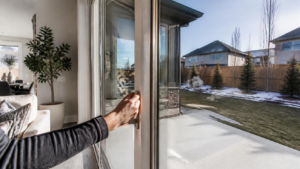
A window that once opened effortlessly but now requires significant force is telling you something. The same goes for a patio door that has become difficult to slide or an entry door that no longer closes and latches comfortably.
Some operating problems are relatively minor and may be resolved through adjustment, cleaning, or replacement of individual hardware components.
But when operation becomes consistently difficult, especially when combined with other signs of wear, it may be time to consider whether the product is still serving your needs.
Pay attention to changes such as:
- Windows that stick when opening or closing
- Handles that feel loose or difficult to operate
- Patio doors that no longer slide smoothly
- Doors that don’t close properly
- Locks that are increasingly difficult to engage
- Windows that are rarely opened because they’re inconvenient to use
These issues may seem small at first. But when something you use every day becomes frustrating, the impact can add up.
The upgrade opportunity
An upgrade can provide an opportunity to improve everyday functionality rather than simply correcting one isolated problem.
A well-chosen replacement should make the space easier and more pleasant to use.
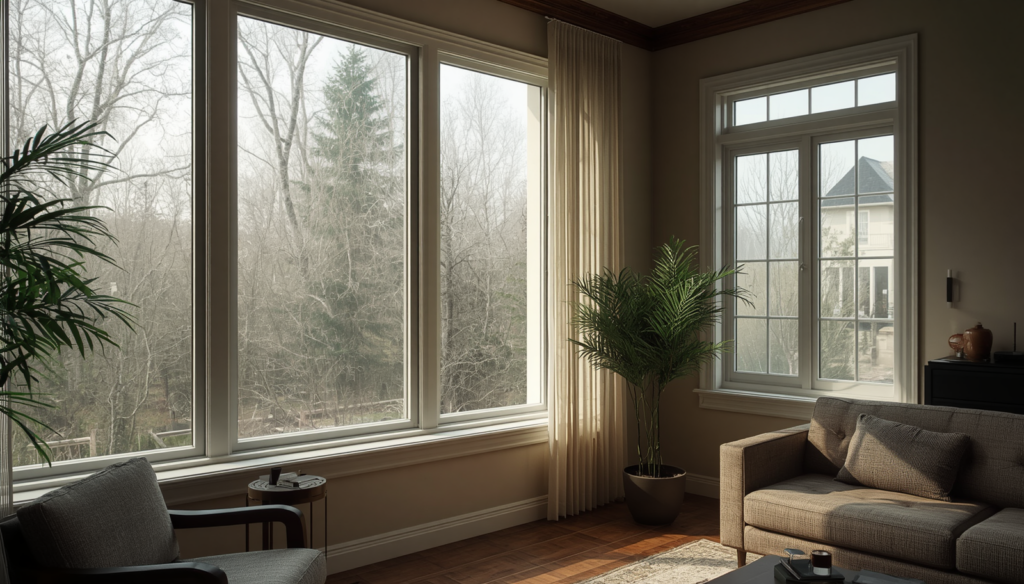
3. You’re Seeing Condensation or Other Signs of Moisture Problems
Condensation deserves a little investigation because not all condensation means the same thing.
Occasional condensation on the room-side surface of a window can be influenced by indoor humidity, ventilation, temperature, and other conditions. It doesn’t automatically mean the window needs to be replaced.
However, moisture that appears between the panes of insulated glass can indicate a failure of the sealed insulating glass unit.
Other moisture-related warning signs can include:
- Persistent moisture around a window
- Water staining near an opening
- Deteriorating materials around a window or door
- Visible damage associated with moisture
- Fogging or haze between insulated glass panes
The important thing is not to jump immediately to a replacement conclusion.
First, determine where the moisture is coming from and what is causing it.
The upgrade opportunity
If the issue involves a failed component, repair or component replacement may sometimes be possible.
If the problem is part of a larger pattern of deterioration or declining performance, however, a complete upgrade may make more sense.
Either way, investigating the problem early is preferable to ignoring it.
4. Your Home Looks Dated Even After Other Improvements
Maybe you’ve already refreshed the paint.
You’ve updated the flooring, changed the furniture, improved the lighting, or renovated the kitchen.
Yet something still feels… old.
Take a look at your windows and doors.
Because they’re such visible architectural elements, outdated styles can influence the overall appearance of a home more than homeowners sometimes realize.
You may notice:
- Older-looking window profiles
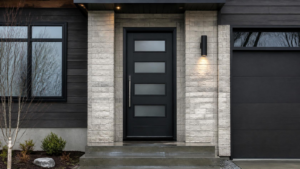
- Worn or dated entry doors
- Mismatched styles from different renovation periods
- Outdated colours or finishes
- Windows that don’t complement the home’s architecture
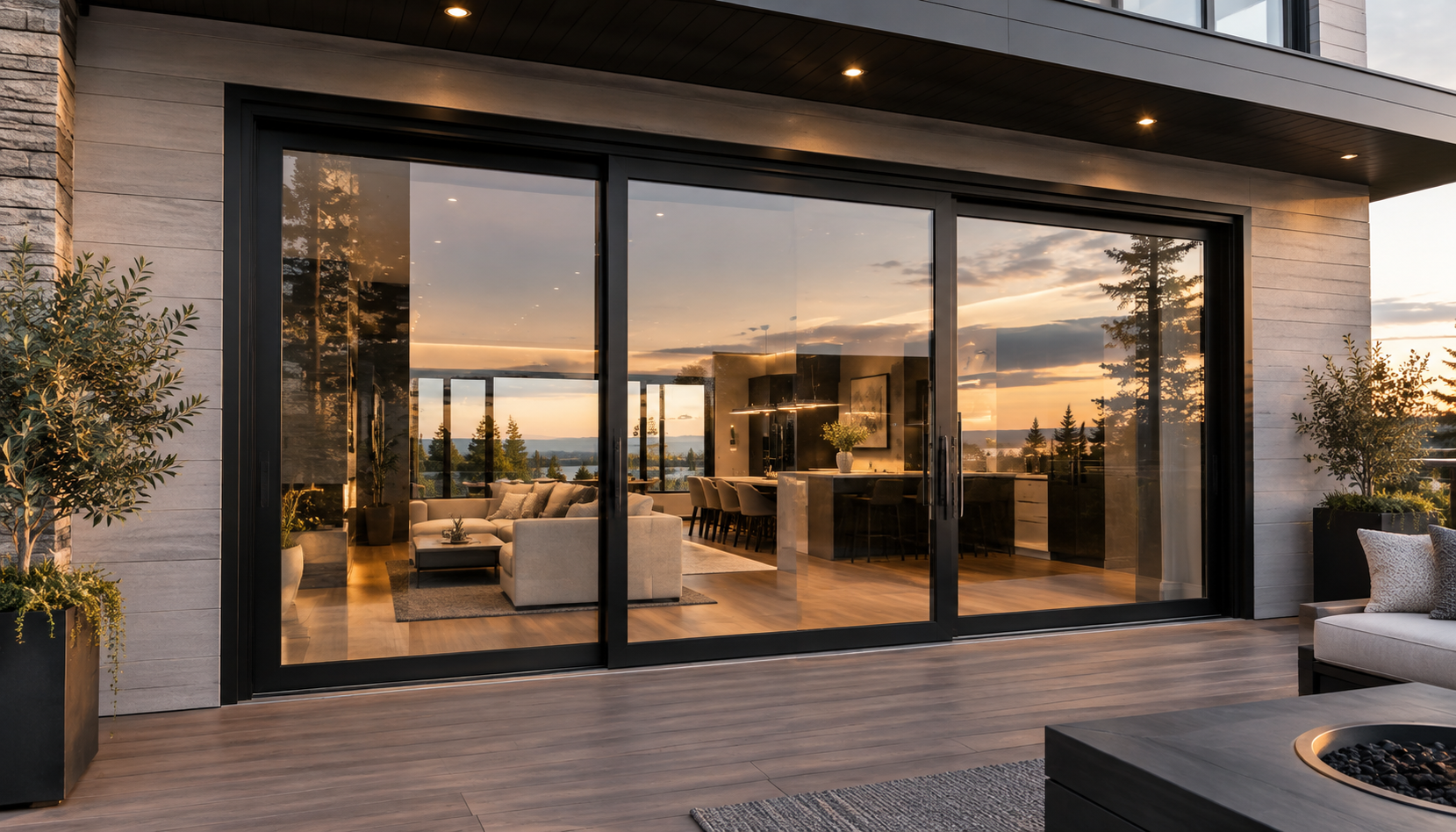
- A patio door that looks out of place after an interior renovation
This doesn’t mean every older-looking product needs to be replaced.
But if you’ve invested in updating other parts of your home, the remaining dated elements can become more noticeable.
The upgrade opportunity
Replacing windows, an entry door, or a patio door can help tie different parts of the home together.
The goal isn’t necessarily to make everything look brand new.
It’s to create a more intentional appearance where the major elements work together.
A well-proportioned window, thoughtfully selected entry door, or modern patio door can change the character of a room or exterior without requiring an entire renovation.
5. Your Windows and Doors No Longer Match the Way You Live
Your home may be the same house, but the way you use it can change considerably over the years.
A room that used to be a formal dining area may now be a home office. A rarely used patio may have become the centre of your family’s outdoor space. A bedroom may now belong to someone who needs more natural light or easier ventilation.
Your original windows and doors were selected for the needs of the home at that time.
Those needs may be different now.
Ask yourself:
Are you getting the functionality you actually want from the space?
Maybe you’d like:
- Easier access to an outdoor area
- More natural light
- Better ventilation
- A more convenient opening style
- A wider connection between indoors and outdoors
- Improved visibility
- A more functional entrance
These aren’t necessarily problems with your existing products.
They may simply indicate that your home has evolved.
The upgrade opportunity
An upgrade can be about improving how your home works, not just fixing what’s broken.
Choosing an opening style or configuration that better suits the way you live can make everyday spaces more functional.
Sometimes, that improvement can be surprisingly noticeable.
6. You’re Spending More Time Maintaining Things Than Enjoying Them
Every home requires maintenance.
But there is a difference between normal upkeep and constantly dealing with aging components.
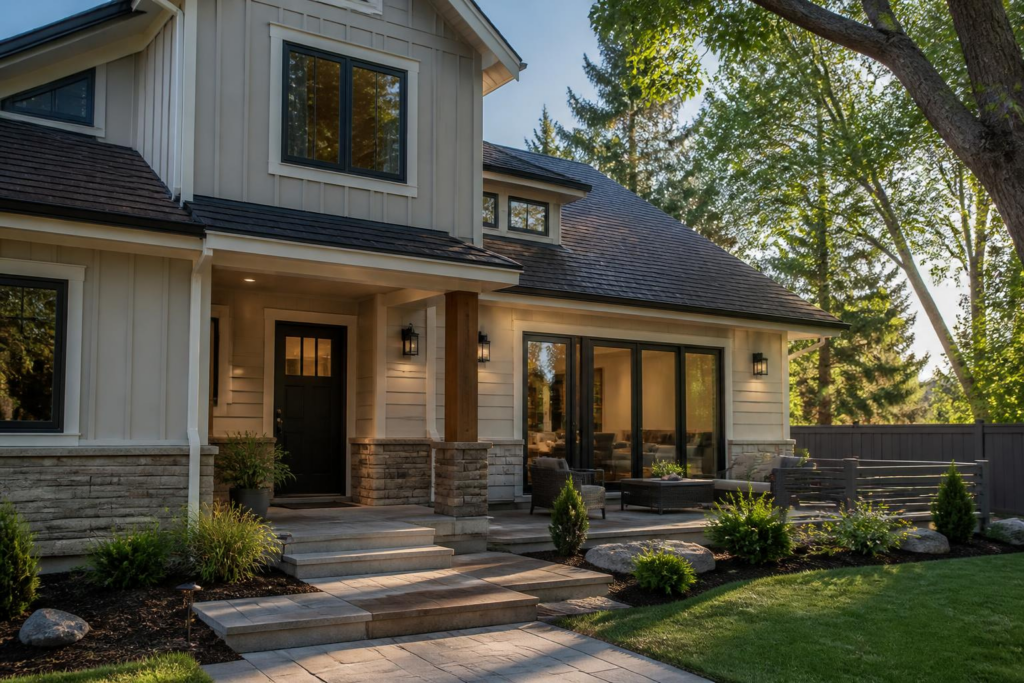
If you’re regularly adjusting, repairing, repainting, resealing, or troubleshooting the same windows and doors, it may be time to step back and look at the bigger picture.
Consider the pattern rather than one individual repair.
One broken handle isn’t necessarily a reason to replace a window.
But if that same window has:
- Repeated hardware problems
- Difficult operation
- Drafts
- Deteriorating components
- Failed glass
- Appearance issues
then the question changes.
At some point, continuing to repair individual problems may become less appealing than replacing the product as a whole.
The upgrade opportunity
An upgrade can reduce the amount of attention certain components require and give you products that better fit your current expectations.
The objective isn’t to eliminate maintenance entirely. Every home needs care.
It’s to avoid being trapped in a cycle where you’re repeatedly addressing symptoms without solving the larger issue.
7. You’re Looking at Your Home and Thinking, “There Has to Be a Better Way”
Sometimes there isn’t one obvious problem.
Your windows aren’t necessarily broken. Your entry door still works. Your patio door still opens.
But the house doesn’t feel as comfortable, functional, or visually cohesive as you’d like.
That feeling can be worth paying attention to.
Maybe you’ve started noticing homes with larger areas of glass and wondering whether your own rooms could benefit from more natural light.
Maybe your entryway feels underwhelming.
Maybe your patio door doesn’t provide the connection to the outdoors you want.
Or perhaps you’re simply tired of living with products that feel like they’re from another chapter of your home’s life.
An upgrade doesn’t have to mean a massive renovation.
The upgrade opportunity
Start with the area that bothers you most.
Look at what isn’t working, what feels outdated, and what you wish were different.
Then determine whether a relatively focused improvement could make the space feel significantly better.
Sometimes one well-considered change can have more impact than several small cosmetic updates.
Don’t Wait for Something to Break
One of the biggest misconceptions about home upgrades is that you have to wait until something completely fails.
You don’t.
A window doesn’t have to be unusable before you consider replacing it. An entry door doesn’t have to be damaged beyond repair before you explore new options. A patio door doesn’t have to stop moving before you decide that you’d like something that works better for your home.
The better question is:
Is the existing product still giving you the comfort, performance, appearance, and functionality you want?
If the answer is increasingly no, it’s reasonable to start exploring your options.
That doesn’t necessarily mean replacing everything immediately.
In many cases, homeowners can prioritize the areas that need attention most and tackle improvements over time.
How to Decide Where to Start
If your home is showing several of these signs, don’t feel like you need to upgrade everything at once.
Start by making a simple list.
First, identify the biggest problem.
Is it comfort? Operation? Appearance? Maintenance? Functionality?
Next, identify the products involved.
Are the issues concentrated around particular windows, your entry door, or your patio door?
Then, determine whether repair is realistic.
A smaller issue may have a straightforward solution.
Finally, consider the long-term picture.
If you’re already dealing with several problems, think about whether continuing to repair the existing product makes sense compared with investing in an upgrade.
This approach can help you prioritize instead of turning the process into an overwhelming renovation project.
An Upgrade Should Improve More Than Appearance
A successful home upgrade isn’t simply about making something look newer.
The best improvements combine appearance with performance and everyday functionality.
For windows and doors, that can mean considering factors such as:
- How the product operates
- How it contributes to comfort
- How it fits the architecture of the home
- How much natural light it provides
- How it connects indoor and outdoor spaces
- How well the product suits your daily routine
- How its materials and construction fit your expectations
A beautiful product that doesn’t work well for your space isn’t necessarily the right choice.
Likewise, a highly functional product that clashes with the rest of the home may not deliver the result you’re looking for.
The best upgrade considers the whole picture.
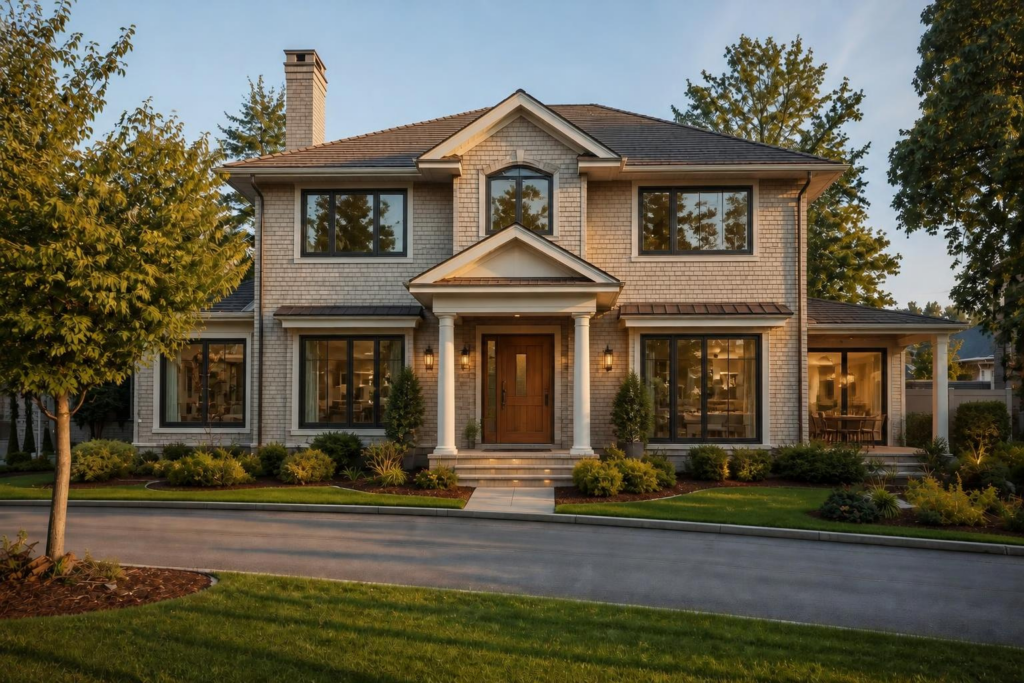
Your Home Doesn’t Need to Be Completely Renovated to Feel New
A home can feel significantly different without undergoing a complete renovation.
Sometimes the biggest changes come from improving the elements you interact with every day.
A better-performing window can make a room feel more comfortable.
A thoughtfully designed entry door can change the first impression of the entire exterior.
A smoother, more inviting patio door can make an outdoor space feel more connected to the home.
And when several elements work together, the result can be even more noticeable.
The important thing is to focus on improvements that solve real problems or provide meaningful benefits not simply change something for the sake of change.
Ready to Give Your Home an Upgrade?
If your home is showing signs that its windows or doors are ready for a change, now is a good time to start exploring your options.
At NORC Windows & Doors, we help homeowners find solutions that balance appearance, functionality, comfort, and long-term value.
You don’t have to renovate everything at once.
Start with the area that matters most, understand your options, and choose an upgrade that makes your home work better for the way you live today.
Your home doesn’t have to be outdated or uncomfortable to deserve an upgrade. Sometimes, the right improvement is simply the one that makes everyday life better.
Explore NORC Windows & Doors and discover what’s possible for your home.